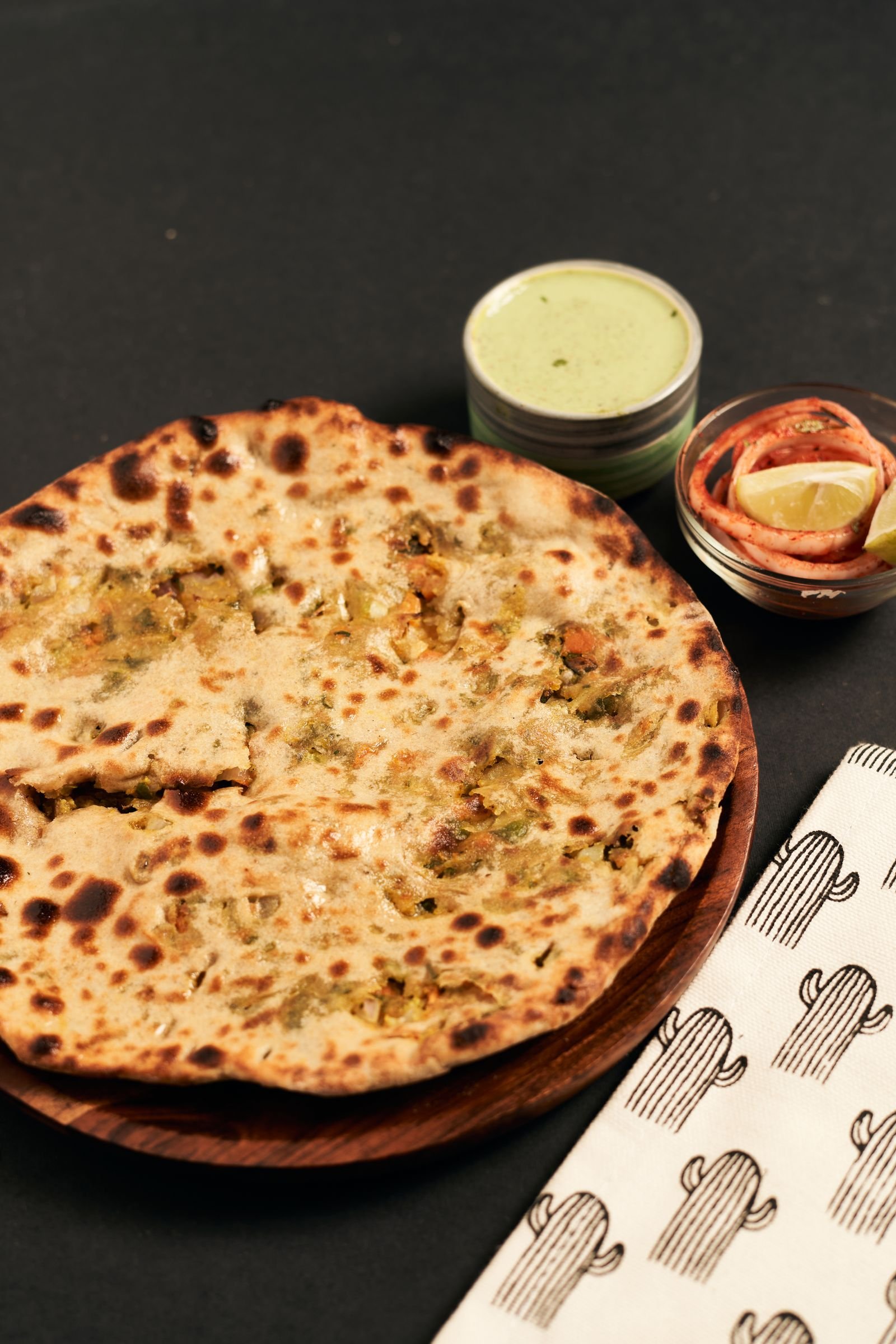
Garlic Naan Recipe Without Tandoor

This garlic naan recipe without a tandoor makes soft, pillowy naan in an ordinary pan — blistered in spots, brushed with garlic butter, and perfect for scooping up curry. No tandoor, no oven, and no special equipment needed. The yogurt in the dough is what keeps it tender, and a properly hot cast-iron skillet does the rest, giving you charred bubbles and a soft, chewy middle in about 20 minutes of cooking.
The story behind Garlic Naan
Naan is the flatbread of the tandoor, the clay oven that has baked bread across Central and South Asia for centuries. The word itself comes from Persian, and the bread travelled into India with Mughal kitchens, where it became the bread of royal tables and roadside eateries alike. In the tandoor, the dough is slapped onto the oven's hot inner wall, where it puffs, blisters, and chars in under two minutes. The version in this recipe keeps that spirit and moves it into a cast-iron skillet, which is the closest thing most home kitchens have to a tandoor wall.
In North Indian and Pakistani homes, naan is the bread that appears when the meal matters. It is torn, not cut, and used to scoop up curry, dal, and kebabs — the bread is the spoon. Restaurants serve it straight off the tandoor, brushed with ghee and still steaming, and it rarely survives the walk to the table untouched. Garlic naan is the most loved variation: the raw garlic is pressed into the dough or brushed on with butter so it cooks gently on the hot bread and turns sweet instead of sharp.
What makes a good naan is the contrast between the outside and the inside. The surface should have dark, charred blisters and a faint smokiness, while the middle stays soft, chewy, and slightly springy. The yogurt in the dough does the quiet work here: its acid tenderizes the crumb and keeps the bread soft long after it leaves the pan. The 10-minute rest after dividing the dough matters just as much, because relaxed dough rolls out without springing back and stays an even thickness.
Cook naan on a curry night, when you have a pot of something saucy that needs scooping, or on a weekend when there is time to let the dough rise properly. It also works as a wrap for kebabs and grilled vegetables, as a base for a quick flatbread pizza, or simply torn and eaten warm with butter while the rest of dinner finishes. Make a double batch — naan disappears fast, and it freezes well.
- Prep time
- 1 hr
- Cook time
- 20 mins
- Total time
- 1 hr 20 mins
- Servings
- 8 servings
- Calories
- 260
Ingredients
- 3 1/2 cups all-purpose flour
- 2 teaspoons instant yeast
- 1 tablespoon sugar
- 1 1/2 teaspoons salt
- 1/4 teaspoon baking soda
- 3/4 cup warm milk
- 1/2 cup plain yogurt, at room temperature
- 3 tablespoons oil, plus more for the bowl
- 6 garlic cloves, minced
- 4 tablespoons butter, melted
- 2 tablespoons chopped fresh cilantro
Instructions
- Whisk the flour, yeast, sugar, salt, and baking soda in a large bowl until they are evenly mixed. The baking soda works with the yogurt's acid to give the dough a little extra lift, so make sure it is not left in one clump. A quick whisk now saves uneven rising later.
- Pour in the warm milk, the room-temperature yogurt, and the oil. Stir with a spoon until a shaggy, sticky dough forms, then turn it onto a lightly floured surface. Knead for 8 to 10 minutes, pushing the dough away with the heel of your hand and folding it back, until it turns smooth, soft, and elastic. It should spring back slowly when you poke it.
- Lightly oil the bowl, turn the dough in it so every side is coated, and cover it with a clean towel or cling film. Leave it in a warm spot for about 1 hour, until it has doubled in size. A turned-off oven with the light on is a good warm spot. If the kitchen is cold, give it an extra 15 to 20 minutes.
- Punch the dough down gently to knock out the large air bubbles, then divide it into 8 equal pieces. Roll each piece into a smooth ball, tucking the edges underneath, and rest them on the counter for 10 minutes under a towel. This rest relaxes the gluten, so each ball will roll out without shrinking back.
- On a lightly floured surface, roll or stretch each ball into an oval about a quarter of an inch thick. Keep the edges a touch thicker than the center — that is the traditional shape, and it keeps the rim soft while the middle blisters. Do not roll them paper-thin or they will turn crisp like a cracker.
- Heat a cast-iron skillet over high heat for a full 5 minutes until it is very hot and just starting to smoke lightly. Lay in one naan and leave it alone for 1 to 2 minutes. It will puff up in places and develop dark, charred blisters — that is exactly what you want. Flip it and cook 1 minute more on the second side.
- Brush the hot naan immediately with melted butter while it is still steaming, then sprinkle with minced garlic and chopped cilantro. The heat of the bread melts the butter right in and softens the raw garlic so it turns sweet instead of sharp. Work quickly, while the surface is still hot.
- Stack the finished naans and wrap them in a clean towel as you go. The towel traps the steam and keeps every naan soft until serving time. Do not leave them uncovered on the counter — they dry out in minutes and turn stiff.
- Serve warm alongside curry, dal, or kebabs, and tear the naan at the table rather than cutting it. Tearing and scooping is the whole point of this bread, and a warm, buttered naan with a good curry needs nothing else on the plate.
Pro tips
- Fierce, sustained heat is everything. A properly preheated cast-iron skillet is the best tandoor substitute at home, so give it a full 5 minutes over high heat before the first naan goes in. A lukewarm pan makes pale, flat bread.
- A 10-minute rest after dividing the dough relaxes the gluten, so each naan rolls out without springing back. Skip the rest and the dough will fight you, shrinking smaller every time you roll it.
- Brush with garlic butter the moment each naan leaves the pan. The hot surface melts the butter right in, and the raw garlic softens in the heat instead of staying sharp and raw-tasting.
- Wrap finished naans in a towel as you cook. Stacked under a cover, they steam themselves softer, and they stay warm and pliable until the whole batch is done.
- Keep the dough balls covered while you work. Exposed dough dries out and forms a skin, and that skin turns into tough spots on the finished naan.
Variations & serving ideas
The simplest change is to leave the garlic out and make plain naan, brushed with butter or ghee. It is the everyday bread of North Indian tables, and it lets the curry do the talking. A butter naan with a little extra ghee brushed on top is richer and a touch more golden, while a plain one is lighter and better for sopping up thin, brothy dals.
Stuffed naan turns the bread into a meal on its own. For a cheese naan, flatten a ball of dough, place a small handful of grated mozzarella or paneer in the center, pinch the dough closed, and roll it out gently — roll from the center outward so the filling does not burst through. Peshawari naan is filled with chopped nuts, raisins, and a little sugar, and it is served sweet alongside spicy curries. Both need a gentler hand when rolling and a slightly lower heat so the filling cooks through without burning the outside.
Whole wheat flour swaps in well for up to half the white flour, giving a nuttier, heartier bread that still puffs. It needs a touch more milk, a tablespoon or two, because whole wheat drinks up more liquid. The dough will feel a little stiffer, but the rise and the cooking time stay the same, and the blistered finish is just as good.
Serve naan as more than a curry side. Cut it into wedges for scooping hummus or dips, roll it around kebabs and salad for a wrap, or use it as a flatbread base — a spoon of tomato sauce, some cheese, and a few minutes under the grill makes a quick naan pizza. It also makes a fine breakfast, split and filled with a fried egg and a little chili sauce.
Getting it right
The dough is where good naan starts. Knead it until it is smooth and elastic — about 8 to 10 minutes by hand — and it should spring back slowly when poked. Under-kneaded dough tears when you roll it and bakes up dense. The yogurt matters here too: its acid softens the crumb, and room-temperature yogurt mixes in far more easily than cold yogurt straight from the fridge. Let the dough double fully before you shape it; an impatient rise gives a tight, heavy bread.
Heat control is the whole game once the dough is shaped. The skillet must be fiercely hot before the first naan touches it — five full minutes over high heat, until it is just starting to smoke. That blast of heat is what makes the bread puff: the moisture inside the dough turns to steam in seconds and lifts the top layer into bubbles, which then char where they touch the metal. If the pan is only warm, the naan will dry out before it puffs, and you will get a flat, pale disc instead.
The common mistakes are easy to name. Naan that will not puff usually means the pan was not hot enough, or the dough was rolled too thin. A tough, leathery naan usually means it was cooked too long or left uncovered after cooking. Dough that springs back while rolling means it missed its 10-minute rest. And garlic that tastes raw and harsh means the butter was brushed on after the naan had cooled — brush it on while the bread is still steaming hot, and the garlic will mellow.
Storing & reheating
Leftover naan keeps for up to 2 days at room temperature in an airtight bag, or 4 to 5 days in the fridge. Brush the finished naans lightly with oil or ghee before storing, and let them cool completely before you seal the bag — warm bread trapped in plastic turns soggy. Stack them with a sheet of parchment between each one so they do not stick together.
For longer storage, freeze the cooled naans in a zip bag with parchment between them for up to 3 months. Thaw at room temperature for 20 minutes, then reheat in a dry hot skillet for 30 seconds a side, or wrap in foil and warm in a 350°F (175°C) oven for 5 minutes. The skillet is better: it brings back a little of the blistered crispness. Raw dough balls also freeze well — thaw overnight in the fridge, let them come to room temperature, and roll as usual.
Frequently asked questions
Can I make naan without yogurt?
Yes, but it will taste more like a rustic flatbread. Regular full-fat milk or even warm water works in place of yogurt, but the yogurt is what makes the naan exceptionally soft and tender. If you skip it, add an extra tablespoon of oil to keep the dough from drying out.
Why did my naan not puff up?
The pan was not hot enough. Naan needs fierce heat to puff and blister — preheat the skillet for a full 5 minutes over high heat until it is smoking lightly. The dough also needs its 10-minute rest after dividing, or it will be too tight to puff properly.
How do I store leftover naan?
Brush the finished naans lightly with oil or ghee, cool them completely, and store in an airtight bag for up to 2 days. Reheat in a dry hot skillet for 30 seconds a side for the best texture — the microwave makes them soft but a little chewy.
Should I roll or stretch the naan?
A rolling pin is fine, but naan is traditionally stretched by hand, which keeps the edges slightly thicker and softer. Roll evenly and do not press the center too thin. If the dough springs back, let it rest for 5 more minutes and try again.
Can I freeze naan dough?
Yes. After the first rise, divide the dough, wrap each ball tightly in cling film, and freeze for up to 3 months. Thaw overnight in the fridge, let the balls come to room temperature for 30 minutes, then roll and cook as usual.
Can I make naan without yeast?
Yes, with a little patience. Replace the yeast with an extra half teaspoon of baking soda and a squeeze of lemon juice, and let the dough rest for 30 minutes instead of a full hour. The bread will be a little denser and less puffy, but still soft and good for scooping.