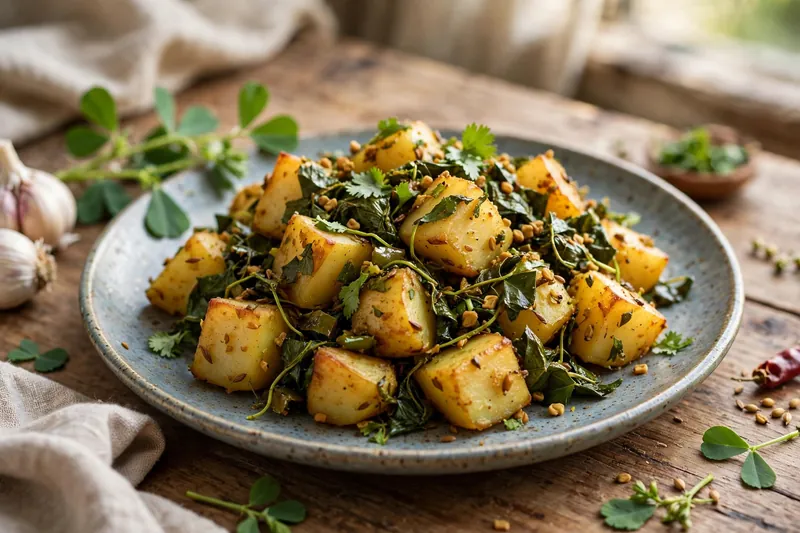
Aloo Gobi Recipe

A humble vegetarian classic done right — tender potatoes and cauliflower simmered with onions, tomatoes, and warm everyday spices. This easy aloo gobi is comforting, budget-friendly, and perfect with hot rotis, and it is the kind of dish that tastes like home.
The story behind Aloo Gobi
Aloo gobi is the taste of an Indian home kitchen. Aloo means potato, gobi means cauliflower, and together they make one of the most cooked dishes across North India — the vegetarian curry that appears on the table when there is no meat in the house and no need for it. It is humble, budget-friendly, and deeply comforting, and it is the dish that children grow up eating and adults grow up missing.
What makes aloo gobi special is its simplicity. Potatoes, cauliflower, onions, tomatoes, and a handful of everyday spices — cumin, coriander, turmeric, chili, garam masala. No cream, no nuts, no exotic ingredients. Just vegetables and spices, cooked slowly in one pan, until the potatoes are tender, the cauliflower is soft, and the masala coats everything in a warm, golden sauce.
The dish is built on the masala, the slow-cooked base of onions, tomatoes and spices that underpins so much of Indian cooking. The onions must brown properly, the tomatoes must melt down, and the spices must fry in the oil until they smell warm and deep. Rush the masala and the whole dish tastes raw and thin; give it time and the vegetables become rich, savoury, and deeply flavoured.
Aloo gobi is also a dish that belongs to the seasons. Cauliflower is at its best in winter, when the heads are tight and white and sweet, and aloo gobi is a winter dish — a warm, hearty curry for cold evenings, eaten with hot rotis straight from the pan. It is the kind of food that makes a house smell like dinner.
Make it when you want a proper home-cooked meal without meat, or when the vegetable drawer has potatoes and cauliflower and nothing else. It takes 45 minutes, it uses one pan, and it feeds four generously. A pot of aloo gobi, a stack of hot rotis, and a spoonful of yoghurt — that is a dinner that needs no further argument.
Aloo gobi is also a dish that teaches the value of everyday cooking. There is nothing exotic in it — potatoes, cauliflower, onions, tomatoes, and the spices that are already in the cupboard. And yet it is a dish that people remember from childhood, that they cook for their own children, and that they miss when they are far from home. It is a reminder that the best food is not always the fanciest, and that a simple curry, made with care, is worth more than a complicated one made without it.
- Prep time
- 15 mins
- Cook time
- 30 mins
- Total time
- 45 mins
- Servings
- 4 servings
- Calories
- 280
Ingredients
- 2 large potatoes (about 1 lb), peeled and cut into 1-inch cubes
- 1 medium cauliflower (about 1.5 lb), cut into small florets
- 2 tablespoons oil
- 1 teaspoon cumin seeds
- 1 large onion, finely chopped
- 1 tablespoon ginger-garlic paste
- 2 medium tomatoes, finely chopped
- 1/2 teaspoon turmeric powder
- 1 teaspoon ground coriander
- 1 teaspoon ground cumin
- 1/2 to 1 teaspoon red chili powder
- 1 teaspoon garam masala
- 1/4 cup chopped fresh cilantro, plus salt to taste
Instructions
- Heat the oil in a large heavy pan over medium heat. Add the cumin seeds and let them sizzle for 30 seconds, until fragrant and starting to pop. The seeds should smell nutty and warm — this quick bloom in hot oil wakes them up far better than adding them to a cold pan.
- Add the finely chopped onion and cook, stirring, for 6 to 7 minutes, until golden at the edges and soft all the way through. Stir in the ginger-garlic paste and cook for 1 minute more, until the raw smell fades and the paste turns fragrant.
- Add the finely chopped tomatoes, turmeric, ground coriander, ground cumin and chili powder. Cook for 5 minutes, mashing the tomatoes with the back of the spoon, until they melt into the masala and the oil begins to separate from the edges. That separation is the sign the masala is properly cooked.
- Add the potato cubes and cauliflower florets with half a cup of water and salt to taste. Toss everything well, turning the vegetables over so every piece is coated in the masala. The vegetables should be evenly coated, with the masala clinging to every surface.
- Cover the pan and cook on low heat for 15 to 18 minutes, stirring gently twice, until the potatoes and cauliflower are fork-tender. Keep the heat low — high heat scorches the masala before the vegetables soften. Add a splash of water if the pan looks dry, but do not add too much; the dish should be moist, not soupy.
- Uncover, sprinkle over the garam masala, and cook for 2 more minutes, stirring gently, so the spices bloom through the dish. The garam masala goes in last because its warmth is volatile — added too early, it cooks away and loses its fragrance.
- Turn off the heat, fold in the fresh cilantro, and rest for 5 minutes before serving. The rest lets the flavours settle and the masala thicken slightly. Serve hot with roti, paratha, or steamed rice, and a squeeze of lemon over the top.
Pro tips
- Cut the cauliflower into small, even florets so they cook at the same pace as the potatoes. Uneven florets mean some are hard and some are mush.
- Keep the heat low once covered — high heat scorches the masala before the vegetables soften, and the bottom burns while the top stays raw.
- Add 1/2 cup frozen peas in the last 5 minutes for a colorful aloo-gobi-matar variation. The peas add sweetness and a bright green pop.
- A squeeze of lemon juice at the end brightens all the spices and lifts the richness of the masala.
- Stir gently and only twice while covered. Rough handling breaks the cauliflower apart and turns the dish into a mash.
Variations & serving ideas
The dish is easy to change. Add half a cup of frozen peas in the last 5 minutes for aloo-gobi-matar, a colourful version with a sweet pop in every bite. A handful of spinach, stirred in at the end, wilts into the masala and adds colour and iron. Diced carrots, added with the potatoes, give sweetness and a bright orange note.
The spices can flex too. A pinch of amchur — dried mango powder — stirred in at the end gives a tangy brightness that suits the potatoes. A little kasuri methi — dried fenugreek leaves — crumbled in with the garam masala adds a distinctive, slightly bitter depth. A few curry leaves, fried with the cumin seeds, give a fragrant, South Indian note.
The heat is easy to tune. For a milder version, use half a teaspoon of chili powder and skip the green chilies. For a hotter one, add a slit green chili with the tomatoes, or a pinch of chili flakes with the garam masala. The turmeric and coriander stay the same either way — they are the backbone of the dish.
Serve aloo gobi with hot roti, paratha, or steamed rice, and a spoonful of yoghurt on the side. A simple salad of onion and tomato, with a squeeze of lemon, completes the plate. It is a complete meal on its own, and it needs nothing fancy.
A few practical notes help the dish turn out well every time. If the potatoes are different sizes, cut the larger ones smaller so they cook evenly — uneven potatoes mean some are hard and some are falling apart. If the masala sticks to the pan, add a splash of water and scrape the bottom; those browned bits are flavour. And if the dish looks dry at the end, add a splash of water and a squeeze of lemon — the moisture and the acid wake it up.
Getting it right
The key technique is the masala, and it is a matter of patience. The onions need a full 6 to 7 minutes over medium heat to turn golden at the edges, the tomatoes need 5 minutes to melt into the masala, and the spices need time to fry in the oil until they smell warm and deep. Rush any of these and the dish tastes raw and thin; give them time and the vegetables become rich and savoury.
The vegetables need care too. The cauliflower must be cut into small, even florets, so they cook at the same pace as the potatoes — big florets stay hard while small ones collapse. The potatoes must be cut into 1-inch cubes, so they cook through in the same time. And the pan must be stirred gently, only twice while covered, so the cauliflower does not break apart.
The heat is the third skill. Once the pan is covered, the heat must stay low — high heat scorches the masala before the vegetables soften, and the bottom of the pan burns while the top stays raw. Low heat, a tight lid, and patience are what make the vegetables tender without burning the masala.
The common mistakes are uneven florets, high heat, and over-stirring. Cut the cauliflower small and even. Keep the heat low once covered. And stir gently, only twice — the cauliflower is fragile, and rough handling turns it into mush. If the pan looks dry, add a splash of water, but do not drown the dish.
One last detail: rest the dish for 5 minutes before serving. The flavours settle, the masala thickens slightly, and the vegetables relax after the simmer. An aloo gobi served straight from the pan tastes good; one rested for 5 minutes tastes better, with the spices in better balance.
Storing & reheating
Aloo gobi keeps in the fridge for up to 3 days in a sealed container, and the flavour deepens overnight as the spices settle into the vegetables. It is one of those dishes that tastes better the next day, when the masala has had time to work its way through every piece of potato and cauliflower.
Reheat gently in a pan over medium heat with a splash of water, stirring until hot through. A fresh squeeze of lemon and a little chopped cilantro at the end wakes it up. Aloo gobi also freezes well for up to 2 months — thaw in the fridge overnight and reheat the same way, though the cauliflower will be softer after freezing.
For the best flavour, add the fresh cilantro and lemon juice only when serving, not before storing. The herbs wilt in the fridge, and a fresh garnish at the table makes the reheated dish taste newly made.
Frequently asked questions
Can I make aloo gobi without onion and garlic?
Yes — skip them and start with the tomatoes and spices in hot oil. Many no-onion-no-garlic versions are made for fasting days and taste just as good, with the tomatoes and spices carrying the flavour.
How do I stop the cauliflower from breaking apart?
Keep the florets small but sturdy, stir gently only twice while covered, and avoid overcooking — pull the pan off the heat as soon as a fork slides in easily. Overcooked cauliflower collapses into the masala.
Can I use frozen cauliflower?
Yes, thaw it first and pat dry so it does not water down the masala. It cooks a little faster, so check for doneness a few minutes earlier, and stir even more gently.
How long does aloo gobi keep?
Refrigerate for up to 3 days. The flavors deepen overnight; reheat gently with a splash of water, and add a fresh squeeze of lemon and a little chopped cilantro at the end.
What if the aloo gobi is too spicy?
Add a splash of water and stir well, or a spoonful of plain yoghurt off the heat. A little extra tomato also helps — the sweetness balances the chili without changing the dish.
Is aloo gobi a main dish or a side?
Yes — potatoes and cauliflower are both filling, and the dish is substantial on its own with roti or rice. A spoonful of yoghurt and a simple salad on the side complete the meal.