Greek Lemon Potatoes Recipe
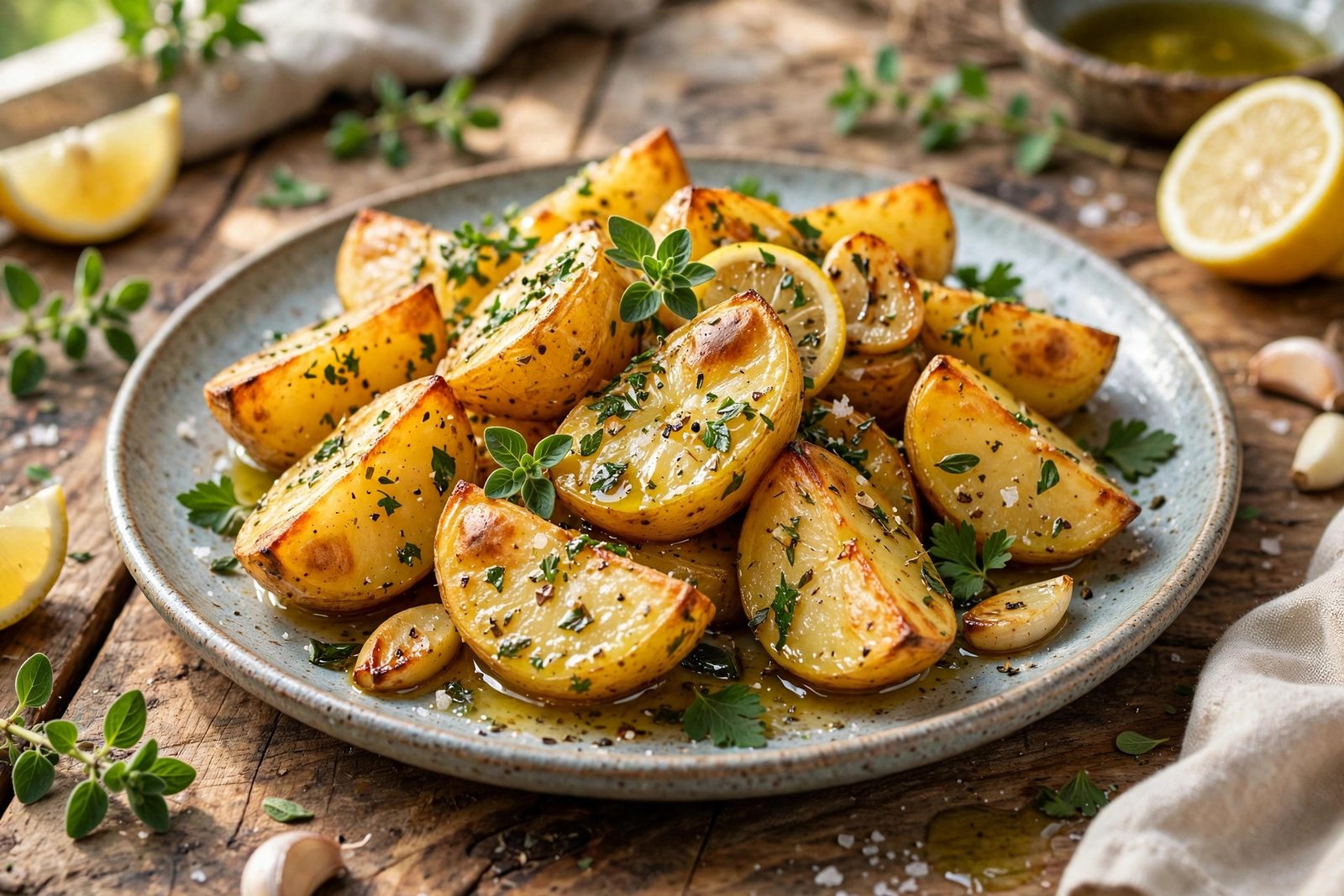
Greek Lemon Potatoes are the side dish that steals the show: crisp-edged, fluffy-centred potatoes roasted in lemon, olive oil and oregano until gloriously golden. The stock keeps them moist inside while the edges turn crisp, and the lemon gives them a bright, tangy flavour that goes with everything.
The story behind Greek Lemon Potatoes
Greek lemon potatoes are the side dish that upstages the main course. In Greek tavernas, they arrive in a shallow dish, golden and glistening, swimming in a little of their lemony cooking liquid, and they disappear fast. They are made from simple ingredients, potatoes, lemon, olive oil, garlic and oregano, but the method is what makes them special: roasted in stock, so they absorb flavour as they cook, turning fluffy inside and crisp at the edges.
The dish is a staple of Greek home cooking and taverna menus, served alongside roast lamb, grilled chicken, or fish. It belongs to the tradition of Greek oven cooking, where vegetables are roasted slowly in olive oil and lemon until they are meltingly tender. The potatoes are not just a side: they are a dish in their own right, and many Greek meals are built around them.
What makes them special is the combination of textures. The stock keeps the potatoes moist as they roast, so the centres turn fluffy and soft. The high heat crisps the edges and the flat sides that touch the pan. The lemon juice, added to the stock, gives a bright tang that cuts through the richness of the oil. The garlic and oregano add depth and a herbal warmth. Eaten hot, with a little of the pan juices spooned over, they are hard to beat.
Make them whenever you want a side dish that people will remember. They take fifty minutes in the oven, but most of that time is hands-off, and they go with almost anything: roast meats, grilled fish, a simple salad, or on their own with bread to mop up the juices. They are also a good dish for a crowd, as they scale easily.
The dish is also forgiving. The potatoes can roast a little longer without harm, and the lemon can be adjusted to taste. It is a recipe that rewards good ingredients, a decent olive oil, fresh lemons, and proper potatoes, but it does not demand perfection. It is home cooking at its best.
The dish also shows how Greek cooking treats olive oil. In Greece, olive oil is not a background ingredient, it is a main one, used generously and chosen carefully. The oil in this dish does three jobs: it crisps the potatoes, it carries the lemon and garlic flavour, and it forms the glossy sauce in the bottom of the tin. A good extra virgin olive oil, fruity and peppery, makes the dish taste like a Greek taverna. A bland oil makes it taste like ordinary roast potatoes with lemon. The difference is worth the price of a decent bottle.
- Prep time
- 15 mins
- Cook time
- 50 mins
- Total time
- 65 mins
- Servings
- 4 servings
- Calories
- 320
Ingredients
- 1 kg potatoes, cut into wedges
- 80 ml olive oil
- Juice of 2 lemons
- 4 garlic cloves, smashed
- 1 tbsp dried oregano
- 250 ml chicken or vegetable stock
- Salt and black pepper
- Fresh parsley, to garnish
Instructions
- Preheat the oven to 200°C. Peel the potatoes and cut them into large wedges, about 6-8 cm long and 3 cm thick. Large wedges hold their shape during the long roast and develop a fluffy centre. Small pieces dry out and go hard. Put the wedges in a large roasting tin in a single layer.
- Whisk together the olive oil, lemon juice and stock in a jug. Season with salt and black pepper. Pour the mixture over the potatoes, making sure every wedge is coated. The liquid should come about halfway up the potatoes: enough to steam them as they roast, but not so much that they boil.
- Scatter over the smashed garlic cloves and the dried oregano, rubbing the oregano between your palms as you add it to release its aroma. Tuck the garlic cloves between the potatoes so they roast in the liquid and turn sweet and soft. Do not use garlic powder: whole smashed cloves are essential.
- Roast for 25 minutes, then turn the potatoes carefully with a spatula, so the pale sides face down and the browned sides face up. The liquid will have reduced by about half. Turn gently: the potatoes are softening and can break if handled roughly.
- Roast for a further 20-25 minutes, turning once more halfway through, until the potatoes are deep golden, crisp at the edges, and tender all the way through when pierced with a knife. The liquid should have mostly evaporated, leaving a glossy, lemony glaze on the potatoes and a little sauce in the tin.
- Taste a potato and adjust: add a squeeze more lemon juice if you want more brightness, or a pinch more salt. The potatoes should taste lemony and savoury, with the oregano and garlic in the background. If they look dry, add a splash more stock and roast for 5 minutes more.
- Transfer the potatoes to a serving dish, scraping up any crispy bits from the tin. Spoon over the remaining pan juices, which are full of flavour. Scatter over the fresh parsley and serve hot, as a side dish for roast meats, grilled fish, or on their own with bread.
Pro tips
- Use floury potatoes. Maris Piper, Russet or King Edward are ideal: they go fluffy inside and crisp at the edges. Waxy potatoes stay firm and do not absorb the lemony stock as well. The potato type makes a real difference to this dish.
- Do not crowd the tin. The potatoes need space around them so the hot air can circulate and the edges can crisp. Crowded potatoes steam instead of roasting and turn soft all over. Use a large tin, or two tins if needed, and keep the wedges in a single layer.
- Turn them gently. The potatoes soften as they cook and can break if turned roughly. Use a wide spatula and turn them carefully, in one motion, so the browned side faces up. Two turns during cooking is enough: more handling breaks them up.
- Add the lemon juice at the start. The lemon cooks into the stock and flavours the potatoes all the way through. A squeeze of fresh lemon at the end adds brightness, but the deep lemon flavour comes from the juice in the roasting liquid.
- Do not skimp on the oil. Olive oil is what crisps the potatoes and carries the flavour. Eighty millilitres sounds like a lot, but much of it stays in the tin. A good extra virgin olive oil makes a noticeable difference to the finished dish.
Variations & serving ideas
Chicken is the classic addition. Brown chicken thighs in the roasting tin first, then add the potatoes and liquid around them and roast together. The chicken fat enriches the potatoes, and the lemon flavours the chicken. It becomes a complete one-tray meal that needs nothing but a salad on the side. Lamb chops work the same way.
Herbs can change the character. Fresh rosemary, added with the garlic, gives a piney, aromatic note. Thyme works well too. A little chopped fresh dill, scattered over at the end, adds a fresh, grassy flavour that suits the lemon. Dried oregano is traditional, but fresh oregano, if you can find it, is even better.
Feta is a good finishing touch. Crumble feta over the hot potatoes just before serving, and it softens slightly in the heat without melting completely. The salty, tangy cheese pairs beautifully with the lemon. A few olives, scattered over the top, add a briny note.
For a richer version, add a little white wine to the roasting liquid, or use chicken stock instead of vegetable stock for a deeper flavour. A pinch of chilli flakes adds warmth. A spoonful of honey, whisked into the liquid, gives a subtle sweetness that balances the lemon.
For a complete one-tray dinner, add chunks of aubergine and courgette to the tin alongside the potatoes. They roast in the same lemony stock and turn soft and flavourful, making the dish into a full vegetable roast that needs nothing but bread and a salad. Cherry tomatoes, added in the last 15 minutes, burst in the heat and add sweetness and colour to the pan juices.
Getting it right
Roasting in stock is the technique that defines this dish. The stock keeps the potatoes moist as they roast, so the centres turn fluffy, while the high heat crisps the edges. As the stock evaporates, it concentrates, leaving a glossy, flavourful glaze. The potatoes absorb the lemon and garlic as they cook, so they are seasoned all the way through, not just on the surface.
Potato size and spacing matter. Large wedges, cut evenly, cook at the same rate and develop a good contrast between the fluffy centre and the crisp edge. A single layer, with space between the wedges, lets hot air circulate and browns the potatoes evenly. Crowded potatoes steam and go soft.
Turning is the last skill. Two gentle turns during cooking are enough to brown all sides. Turn too often and the potatoes break apart. Turn too little and only one side browns. Use a wide spatula, work gently, and let the potatoes sit undisturbed between turns so the edges have time to crisp.
Storing & reheating
Lemon potatoes keep in the fridge for up to 3 days in a sealed container. Reheat in a hot oven at 200°C for 10-15 minutes, with a splash of stock or water to stop them drying out. They crisp up again nicely in the oven. The microwave works too, but the edges go soft.
Do not freeze them. Roasted potatoes turn grainy and watery when thawed, and the lemon flavour dulls. They are best made fresh and eaten the same day, though leftovers are still good reheated. If you have leftover potatoes, they are good cold in a salad, or chopped and fried with an egg for breakfast.
Frequently asked questions
What potatoes are best for Greek lemon potatoes?
Floury potatoes: Maris Piper, Russet or King Edward. They go fluffy inside and crisp at the edges, and they absorb the lemony stock well. Waxy potatoes stay firm and do not develop the same contrast. Avoid very small potatoes, which dry out during the long roast. If you only have waxy potatoes, cut them smaller and roast them a little longer, turning more often, though the result will be firmer and less fluffy than with a floury variety.
Can I make lemon potatoes without stock?
Yes, use water instead, though the flavour will be less deep. Add an extra pinch of salt and a little more lemon juice to compensate. Chicken stock gives the richest result, vegetable stock is good for a vegetarian version, and water works in a pinch.
Why are my potatoes not crispy?
The oven was not hot enough, the tin was overcrowded, or the potatoes were too small. Use a hot oven at 200°C, spread the potatoes in a single layer with space between them, and cut them into large wedges. Turning them halfway through helps all sides crisp up.
Can I make lemon potatoes ahead of time?
They are best fresh from the oven, but they reheat well. Roast them, refrigerate for up to 3 days, and reheat in a hot oven at 200°C for 10-15 minutes with a splash of stock. They crisp up again nicely. Do not freeze them.
How much lemon should I use?
The juice of 2 lemons for 1 kg of potatoes gives a bright, tangy flavour without being overpowering. Taste at the end and add more if you like it sharper. The lemon cooks into the stock and mellows during roasting, so the finished dish is less sharp than the raw juice.
What do I serve with Greek lemon potatoes?
Almost anything: roast lamb, grilled chicken, fish, or a simple salad. They are a classic taverna side dish and go with most Mediterranean food. They are also good on their own, with bread to mop up the pan juices, and a green salad on the side.