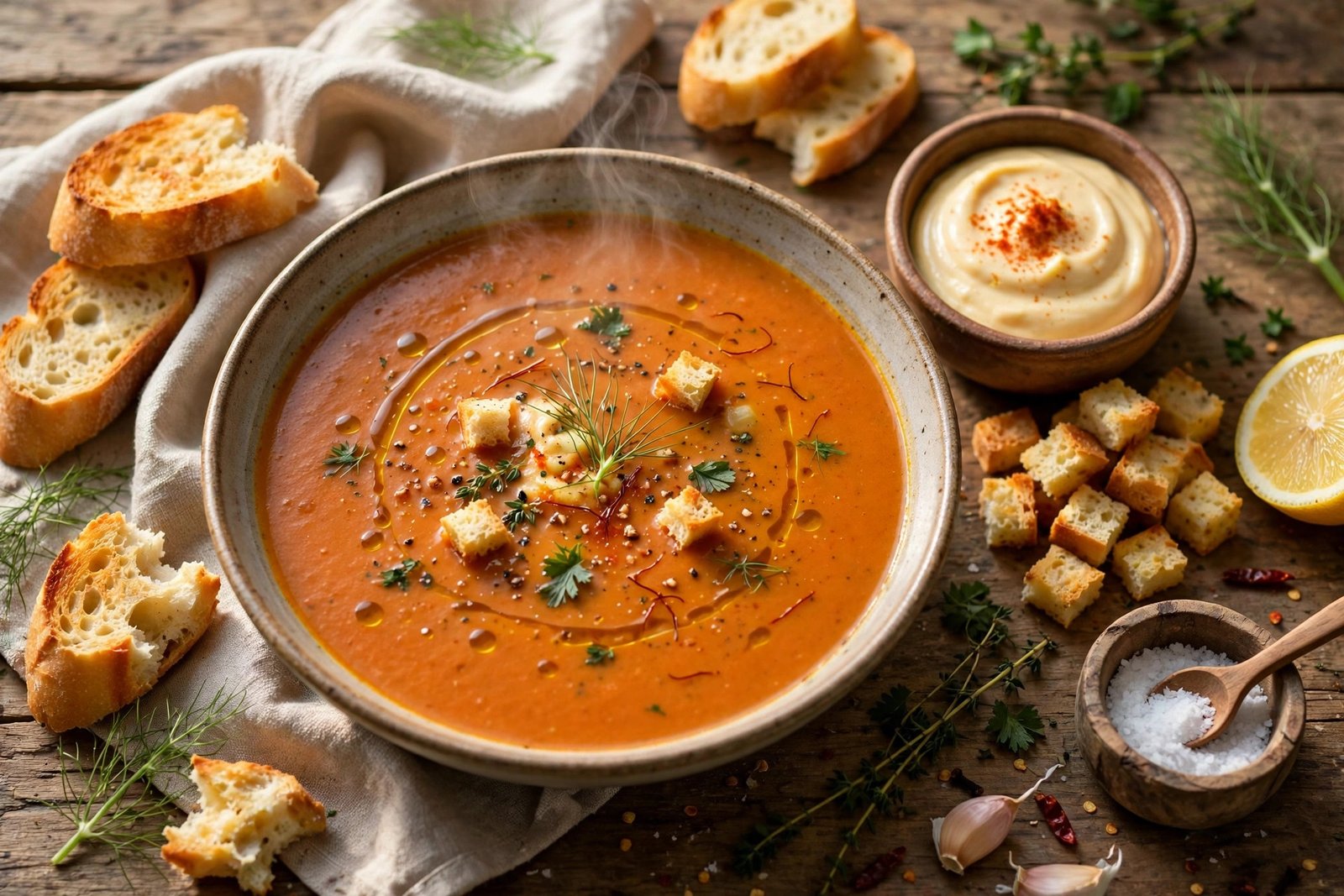
Soupe au Pistou Recipe

Soupe au pistou is the sunshine soup of Provence: a hearty vegetable and bean soup finished with a basil pistou, the French cousin of pesto. It tastes of summer gardens and is wonderful served warm or at room temperature. The pistou goes in at the table, not in the pot, so every bowl gets its own swirl of green.
The story behind Soupe au Pistou
Soupe au pistou is the soup of Provence, the sun-drenched region of southern France where basil grows in abundance and summer vegetables fill the markets. It is a hearty vegetable and bean soup, finished with a spoonful of pistou, a sauce of basil, garlic, Parmesan and olive oil that is the French cousin of pesto. The soup is simple, nourishing and full of sunshine.
The pistou is what makes it special. Unlike pesto, pistou traditionally has no pine nuts, and it is made with basil, garlic, Parmesan and olive oil, pounded or blended into a smooth sauce. It is not stirred into the pot: each person adds a spoonful to their own bowl, swirling it into the hot soup, where it melts into the broth and turns it fragrant and green.
The soup itself is a celebration of summer vegetables: courgettes, carrots, potatoes, green beans and cannellini beans, simmered in vegetable stock until tender. A little pasta, orzo or small shells, is added at the end for substance. The soup is hearty enough to be a meal on its own, with bread for mopping up.
Soupe au pistou is a dish that tastes of the garden. It is best made in summer, when the basil is fragrant and the vegetables are at their peak, but it works year-round with good ingredients. The soup is even better the next day, when the flavours have had time to meld.
The dish is naturally vegetarian, and vegan if you leave out the Parmesan. It is a good soup for a crowd: it scales easily, it reheats well, and the pistou is made fresh at serving time. Serve it warm or at room temperature, with crusty bread and a glass of rose.
This recipe takes about an hour, most of it hands-off simmering. The vegetables cook in stages, so the carrots and potatoes get a head start and the courgettes and beans stay tender. The pistou takes five minutes in a food processor.
Cook soupe au pistou when you want a soup that is both hearty and fresh, a soup that tastes like summer even in the middle of winter. It is a dish that fills you up without weighing you down, and it is one of the great soups of France.
One more thing worth knowing: soupe au pistou is a soup that improves with age. The first bowl is good, the second day's bowl is better. The vegetables absorb the stock, the flavours deepen, and the soup becomes richer. Make a double batch and enjoy it for days.
The pistou is the soul of the dish, and it is worth making it well. Use the freshest basil you can find, good olive oil, and real Parmesan. The pistou is simple, with only four ingredients, so each one matters. There is nowhere to hide a poor ingredient.
The soup is also a good way to use up vegetables that are past their best. A soft courgette, a wrinkled carrot, a potato that has started to sprout: all of them are fine in soup. The long simmer and the pistou will make them delicious. It is a frugal, practical soup, and it is one of the reasons it has endured for centuries.
- Prep time
- 20 mins
- Cook time
- 40 mins
- Total time
- 1 hour
- Servings
- 4 servings
- Calories
- 380
Ingredients
- 2 courgettes, diced
- 2 carrots, diced
- 2 potatoes, diced
- 200 g green beans, cut into pieces
- 400 g canned cannellini beans, drained
- 1 onion, chopped
- 2 garlic cloves, minced
- 1.5 litres vegetable stock
- 100 g small pasta (such as orzo)
- 2 tablespoons olive oil
- 1 large bunch fresh basil
- 2 garlic cloves, for the pistou
- 50 g grated Parmesan
- 60 ml olive oil, for the pistou
Instructions
- Heat the olive oil in a large pot over medium heat. Add the chopped onion and minced garlic and cook for 5 minutes, stirring often, until the onion is soft and translucent. Do not let the garlic brown.
- Add the diced carrots, diced potatoes and vegetable stock. Bring to a boil, then reduce the heat and simmer for 15 minutes. The carrots and potatoes need a head start because they take longer to cook than the other vegetables.
- Add the diced courgettes, green beans cut into pieces, and drained cannellini beans. Stir well and cook for 10 more minutes, until all the vegetables are tender. The courgettes should be soft but not mushy.
- Stir in the small pasta and cook until tender, following the packet time, usually 7 to 8 minutes. The pasta will absorb some of the stock, so add a splash of water if the soup gets too thick.
- While the pasta cooks, make the pistou: blend the basil leaves, garlic cloves, grated Parmesan and olive oil in a food processor until smooth. Season with a pinch of salt. The pistou should be thick and fragrant.
- Season the soup with salt and black pepper. Taste and adjust: the soup should be savoury and well-seasoned, with the sweetness of the vegetables coming through. A squeeze of lemon brightens it if needed.
- Serve the soup hot in wide bowls, with a generous spoonful of pistou swirled into each bowl at the table. Do not stir the pistou into the pot: each person adds their own. Serve with crusty bread.
Pro tips
- Do not stir the pistou into the whole pot; each person adds their own spoonful at the table. The pistou is fresh and fragrant, and stirring it into the hot soup would dull its flavour. Let each bowl get its own swirl of green.
- Use the freshest basil you can find for the brightest flavour. Basil is the heart of the pistou, and wilted or browned leaves will give a dull, bitter sauce. Buy it the day you cook, or pick it from the garden.
- The soup is even better the next day, once the flavours have mingled. The vegetables absorb more stock overnight, and the soup deepens. Make it ahead and reheat gently, making the pistou fresh at serving time.
- Add the pasta just before serving so it stays firm. Pasta left in hot soup will go soft and mushy, and it will absorb too much stock. If you are making the soup ahead, cook the pasta separately and add it when serving.
- Keep the pistou separate from the soup until serving. The pistou will keep in the fridge for up to two days, covered with a thin layer of olive oil to prevent browning.
Variations & serving ideas
The vegetables can be varied with the seasons. In spring, add asparagus and peas. In autumn, add butternut squash and leeks. In winter, use root vegetables and kale. The soup is flexible, and any combination of vegetables works as long as they are cooked in the right order.
For a richer version, add a Parmesan rind to the soup while it simmers. The rind melts into the stock and gives a deep, savoury flavour. Remove it before serving. It is a good use for the rind of a Parmesan wedge.
The pasta can be any small shape: orzo, small shells, ditalini or broken spaghetti. Use what you have. The pasta adds substance and makes the soup a complete meal, but you can leave it out for a lighter soup.
For a vegan version, leave out the Parmesan from the pistou and use a spoon of nutritional yeast instead. The pistou will still be fragrant and flavourful, and the soup will be completely plant-based.
Serve soupe au pistou with crusty bread, which is essential for mopping up the broth. A green salad on the side makes a complete meal. A glass of rose is the classic Provençal partner.
Leftover soup makes a wonderful lunch the next day. The flavours deepen overnight, and the soup reheats well. Make a fresh batch of pistou for serving, and add freshly cooked pasta if the original pasta has gone soft.
For a heartier soup, add a tin of chickpeas along with the cannellini beans. The chickpeas add protein and texture, and they turn the soup into a complete meal. They are a good addition if you are serving the soup as a main course.
Getting it right
The vegetables must be added in stages. Carrots and potatoes take the longest, so they go in first, with a 15-minute head start. Courgettes and green beans cook faster, so they go in later. Adding everything at once gives mushy courgettes and hard carrots.
The stock matters. A good vegetable stock, homemade or a good-quality shop-bought one, is the foundation of the soup. The stock should be savoury and well-seasoned, not bland. Taste it before you start: if it is weak, the soup will be weak.
The pistou needs to be made fresh and used the same day. Basil oxidises quickly, and a pistou left overnight will turn dark and lose its fragrance. Make it just before serving, and use it within an hour for the brightest flavour.
The pasta is a timing skill. Add it when the vegetables are almost done, and cook it until just tender. Overcooked pasta absorbs too much stock and turns the soup into a porridge. If you are making the soup ahead, cook the pasta separately and add it at serving time.
Seasoning is the final step. The soup needs salt and pepper, and a squeeze of lemon can brighten it if the vegetables are sweet. Taste before serving and adjust. The pistou adds salt from the Parmesan, so season the soup lightly and let the pistou do the rest.
The stock should be well-seasoned from the start. Taste it before you add the vegetables: if it is bland, the soup will be bland. A good vegetable stock, homemade or a good-quality shop-bought one, is the foundation. Do not skimp on the stock.
Storing & reheating
Soupe au pistou keeps in the fridge for up to four days in a sealed container. The flavour actually improves overnight as the vegetables absorb more stock. Reheat gently in a covered pot over low heat, adding a splash of water if the soup has thickened too much.
The soup freezes well without the pasta and pistou for up to three months. Freeze it in portions, thaw in the fridge overnight, and add freshly cooked pasta and fresh pistou when serving. The vegetables hold up well after freezing.
The pistou keeps in the fridge for up to two days, covered with a thin layer of olive oil to prevent browning. It does not freeze well, as the basil turns dark and loses its fragrance. Make it fresh each time.
If you are freezing the soup, leave out the pasta and the pistou. Freeze the soup in portions, label each container with the date, and use it within three months. Thaw in the fridge overnight and add freshly cooked pasta and fresh pistou when serving.
Frequently asked questions
What is soupe au pistou?
Soupe au pistou is a Provençal vegetable soup served with pistou, a sauce of basil, garlic, Parmesan and olive oil. It is a hearty, nourishing soup that tastes of summer gardens.
What is the difference between pistou and pesto?
Pistou is the Provençal version of pesto, traditionally made without pine nuts. It is simpler than pesto, with just basil, garlic, Parmesan and olive oil.
Can I freeze soupe au pistou?
Yes, freeze the soup without the pasta and pistou for up to 3 months. Add fresh pasta and pistou when serving. The vegetables hold up well after freezing.
Is soupe au pistou vegetarian?
Yes, it is naturally vegetarian, and vegan if you leave out the Parmesan from the pistou. Use a spoon of nutritional yeast instead for a vegan pistou.
Can I make soupe au pistou ahead?
Yes, the soup is even better the next day, once the flavours have mingled. Make the soup ahead, keep the pistou separate, and cook the pasta fresh at serving time.
What should I serve with soupe au pistou?
Crusty bread is essential for mopping up the broth. A green salad on the side makes a complete meal. A glass of rose is the classic Provençal partner.