Compote de Pommes Recipe
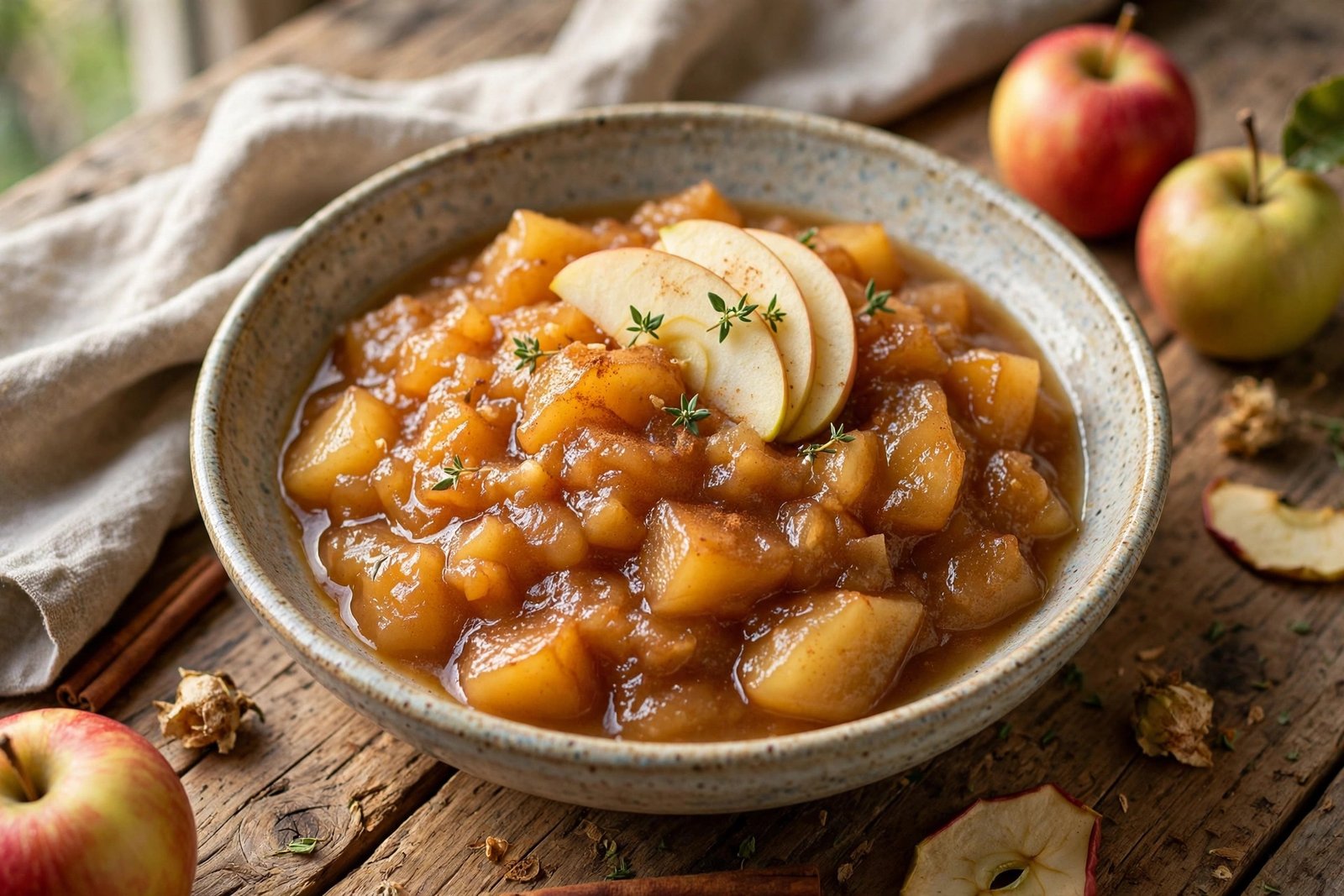
Compote de pommes is a classic French apple compote, gently stewed until soft and fragrant with vanilla and a hint of cinnamon. It is simple, wholesome and endlessly versatile, served warm or cold, on its own or with yoghurt, pancakes or roast pork. A bowl of this is pure French home comfort.
The story behind Compote de Pommes
Compote de pommes is one of the simplest and most beloved dishes in French home cooking. It is just apples, gently stewed with a little sugar, vanilla and cinnamon until soft and fragrant. There is nothing complicated about it, and that is the point: it is a dish that celebrates the apple itself, with very little added.
The apples are the key, and a mix of varieties gives the best result. Tart cooking apples like Bramley break down into a soft puree, while sweet eating apples like Gala hold their shape and add texture. Together they give a compote that is both smooth and chunky, sweet and tart, with a depth of flavour that a single variety cannot match.
The cooking is gentle and slow. The apples are stewed over low heat with just a little water, as they release plenty of juice as they cook. The sugar dissolves into the juices, the vanilla and cinnamon perfume the whole pot, and the apples soften into a fragrant, jammy compote. The whole process takes 25 minutes, and the kitchen smells wonderful.
Compote de pommes is endlessly versatile. It is served warm or cold, on its own in a bowl, or with yoghurt, ice cream, crêpes or pancakes. It is also a classic accompaniment to roast pork, where the sweet-tart apples cut through the rich meat. And it is a favourite for children, who love its soft texture and gentle sweetness.
In France, compote is a staple of home cooking, made in large batches when apples are in season and kept in the fridge for the week. It is the kind of food that is always there, ready to be eaten with breakfast, served as a light dessert, or spooned over porridge on a cold morning.
The texture is a matter of personal taste. Some people like their compote completely smooth, mashed or blended into a puree. Others prefer it rustic, with chunks of apple still visible. Either way is correct, and the recipe can be adjusted to suit. A fork gives a rustic texture; a blender gives a smooth one.
A squeeze of lemon juice is the small detail that makes the compote taste bright rather than flat. The lemon sharpens the sweetness of the apples and the sugar, and it stops the apples from browning as they cook. Taste the compote at the end and add a little more lemon if it needs brightness.
Compote de pommes is also a good way to use up apples that are past their best for eating. Soft, bruised apples that no one wants to eat raw turn into a delicious compote, and nothing is wasted. It is a thrifty, practical dish as well as a delicious one.
- Prep time
- 15 mins
- Cook time
- 25 mins
- Total time
- 40 mins
- Servings
- 4 servings
- Calories
- 180
Ingredients
- 1 kg apples (a mix of Bramley and Gala), peeled, cored and chopped
- 60 g caster sugar
- 1 tsp vanilla extract
- 1/2 tsp ground cinnamon
- 1 cinnamon stick
- 2 tbsp water
- 1 tbsp lemon juice
- Pinch of salt
Instructions
- Peel, core and chop the apples into rough chunks, about 2 cm across. A mix of Bramley and Gala gives the best flavour and texture, but any eating or cooking apples will work. Discard any bruised or brown parts, though slightly soft apples are fine.
- Place the chopped apples in a heavy saucepan with the caster sugar, water, lemon juice and a pinch of salt. The water helps the apples start cooking without sticking, but do not add too much; the apples release plenty of juice as they cook.
- Cook over medium heat for 5 minutes, stirring occasionally, until the apples begin to soften and release their juices. The sugar will dissolve and the pan will start to look glossy. The apples should be starting to collapse at the edges.
- Reduce the heat to low, cover the pan with a lid, and simmer for 15 to 20 minutes, stirring occasionally, until the apples are soft and jammy. The Bramley apples will break down completely, while the Gala pieces will soften but hold some shape.
- Remove the lid and stir in the vanilla extract, ground cinnamon and the cinnamon stick if using. The vanilla and cinnamon should be added at the end so their flavour stays fresh and fragrant. Taste the compote now.
- Mash the compote lightly with a fork for a rustic texture, leaving some chunks intact, or blend it briefly for a smoother result. The texture is a matter of personal taste; a rustic compote with visible apple pieces is traditional, but a smooth puree is also lovely.
- Taste and adjust the flavour. Add a little more sugar if the compote is too tart, or a little more lemon juice if it is too sweet. The compote should be sweet and fragrant, with a gentle tartness that keeps it from being cloying.
- Remove the cinnamon stick if used. Let the compote cool slightly in the pan, then transfer it to a serving bowl or a sealed container. The compote will thicken slightly as it cools, and the flavours will meld together.
- Serve warm or cold, on its own or with yoghurt, ice cream, crêpes or pancakes. A spoonful of compote over porridge is a wonderful breakfast, and a bowl of warm compote with a little cream is a simple, satisfying dessert.
- For a more elegant presentation, serve the compote in small glasses layered with yoghurt and granola, like a parfait. The layers look beautiful, and the contrast of creamy yoghurt, crunchy granola and soft compote is delightful.
Pro tips
- A mix of tart and sweet apples gives the best flavour and texture. Bramley apples break down into a puree, while Gala apples hold their shape and add sweetness.
- Do not add too much water; the apples release plenty of juice as they cook. Two tablespoons is enough to get started, and more water will make the compote thin and watery.
- Keep some apple chunks intact for a lovely rustic texture. A compote that is completely smooth is fine, but a few chunks give it character and make it more interesting to eat.
- It keeps in the fridge for up to a week. Make a large batch when apples are in season and enjoy it through the week with breakfast, dessert or as a snack.
- Add the vanilla and cinnamon at the end so their flavour stays fresh. Cooking them for a long time dulls their aroma, while adding them last keeps them fragrant.
Variations & serving ideas
The fruit can change. Pears make a beautiful compote, softer and more fragrant than apples, and they cook in the same time. A mix of apples and pears is lovely, with the pears adding a floral sweetness. Plums, stoned and halved, make a rich, dark compote in autumn.
The spices can vary too. A star anise added to the pan gives a warm, liquorice-like flavour. A little grated ginger adds heat and freshness. A vanilla pod, split and scraped, gives a more intense vanilla flavour than extract. And a pinch of nutmeg adds a warm, spicy note.
The sweetener can change. Honey instead of sugar gives a floral sweetness, and maple syrup adds a rich, caramel-like flavour. For a lower-sugar version, use sweet apples only and skip the sugar entirely; the compote will be tart but still delicious, especially with yoghurt.
For a richer version, stir in a knob of butter at the end, which gives the compote a silky, glossy finish. A spoonful of cream stirred in makes it luxurious. And a handful of toasted flaked almonds on top adds crunch and a nutty flavour.
Serve it with yoghurt, ice cream, crêpes, pancakes or porridge. It is also a classic accompaniment to roast pork, where the sweet-tart apples cut through the rich meat. And it makes a wonderful filling for a tart or a turnover, spooned into pastry and baked until golden.
For a festive version, add a handful of dried cranberries and a splash of orange juice to the apples as they cook. The cranberries add colour and tartness, and the orange gives a bright, citrusy note. It is a beautiful compote for a holiday table.
The compote can also be used as a sauce for other desserts. Spoon it warm over vanilla ice cream, or serve it alongside a slice of almond cake. It is a versatile preparation that turns up in many French desserts, and it is worth having in the fridge.
Getting it right
Gentle heat is the key to a good compote. The apples need to cook slowly over low heat, with the lid on, so they soften gradually and release their juices. High heat burns the sugar and scorches the apples, giving a bitter, caramelised taste that is not what you want. Low and slow is the way.
Water control is the second skill. Apples release a lot of juice as they cook, so only a small amount of water is needed to get started. Too much water gives a thin, watery compote that never thickens properly. Two tablespoons is enough, and if the compote looks dry, add a splash more, but do not drown the apples.
Timing the spices is the third skill. Vanilla and cinnamon go in at the end, so their flavour stays fresh and fragrant. Cooking them for 20 minutes dulls their aroma and makes the compote taste flat. Stir them in during the last few minutes, and the compote will smell wonderful.
The most common mistake is overcooking the compote until it is a uniform mush with no texture. The apples should be soft and jammy, but some chunks should remain. Check the compote after 15 minutes, and take it off the heat as soon as the apples are soft. A few minutes too long turns a rustic compote into baby food.
Storing & reheating
Compote de pommes keeps in the fridge for up to a week in a sealed container. The flavour improves after a day, as the vanilla and cinnamon meld with the apples. Serve it cold from the fridge, or warm it gently in a pan.
It freezes well for up to 3 months. Freeze in portions, thaw overnight in the fridge, and serve cold or warmed through. The texture may be slightly softer after freezing, but the flavour stays excellent. It is a good way to preserve a glut of autumn apples.
Frequently asked questions
What is compote de pommes?
Compote de pommes is a French apple compote made by gently stewing apples with sugar, vanilla and cinnamon until soft and fragrant. It is simple, wholesome and endlessly versatile, served warm or cold.
What apples are best?
A mix of tart cooking apples like Bramley and sweet eating apples like Gala gives the best balance of flavour and texture. The Bramley breaks down into a puree while the Gala holds its shape.
Can I freeze apple compote?
Yes, freeze in portions for up to 3 months. Thaw in the fridge before serving. The texture may be slightly softer after freezing, but the flavour stays excellent.
What can I serve it with?
It is lovely with yoghurt, ice cream, crêpes, pancakes, or alongside roast pork and cheese. It also makes a wonderful breakfast spooned over porridge or granola. It is also delicious spread on toast or stirred into plain yoghurt for a quick snack.
Can I make it without sugar?
Yes, use sweet apples only and skip the sugar. The compote will be tarter but still delicious, especially with yoghurt or ice cream. A little honey can be added if needed.
Why is my compote watery?
Too much water was added at the start, or the apples were very juicy. Simmer uncovered for a few more minutes to reduce the liquid, and use less water next time. The apples release plenty of juice on their own. Taste as you go.


