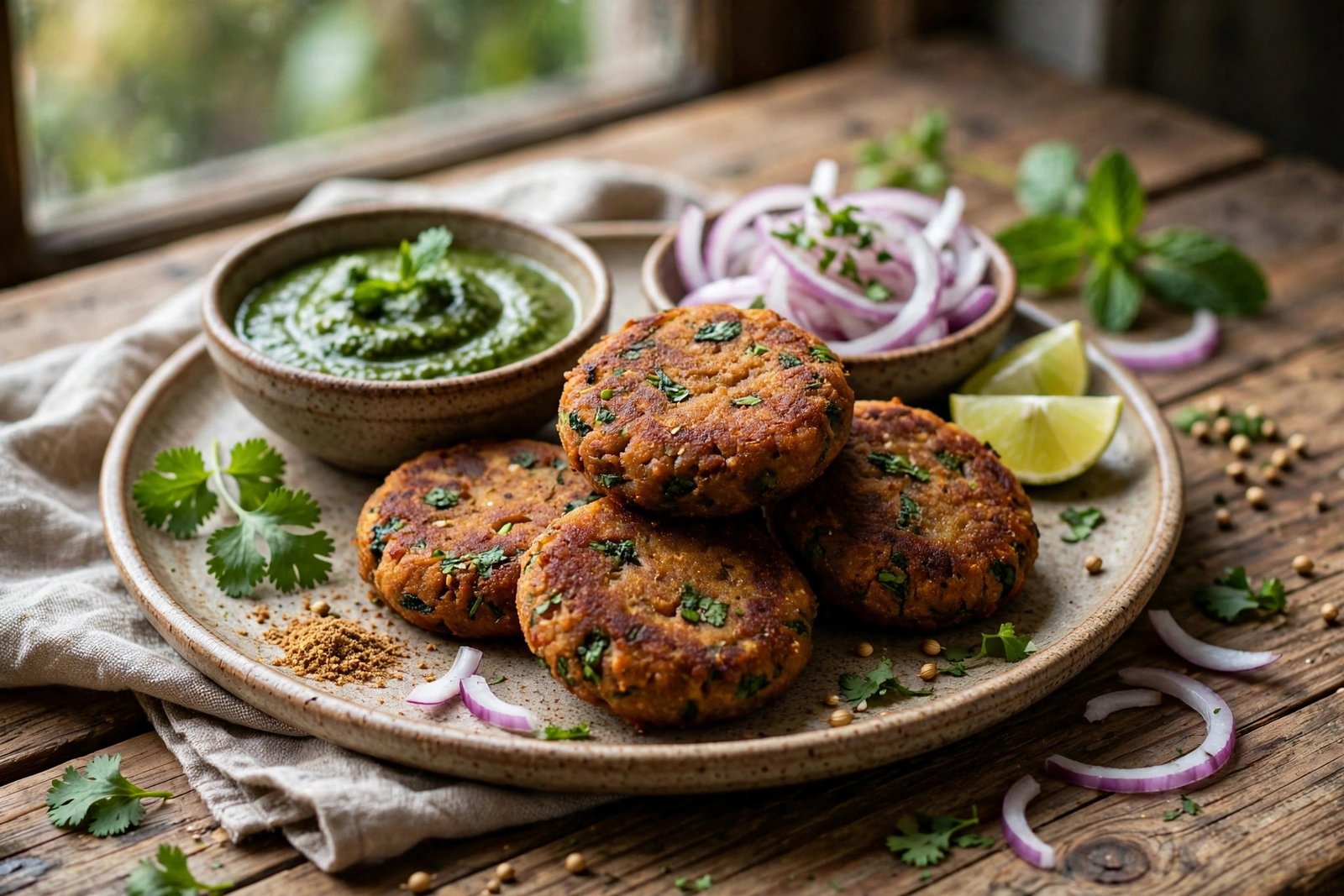
Seekh Kebab Roll Recipe

The seekh kebab roll is desi street food at its best: smoky, juicy minced-meat kebabs wrapped in a flaky paratha with onions, green chutney and cool raita. It is messy, satisfying and impossible to eat just one of. Once you have made them at home, the takeaway version will never quite measure up.
The story behind Seekh Kebab Roll
Seekh kebab takes its name from the seekh — the long metal skewer the minced meat is moulded around before it meets the heat. It is one of the great dishes of the Mughal kitchen, carried across South Asia by cooks who understood that spiced mince, shaped by hand and cooked over charcoal, needs very little else. The roll came later, born on the streets of Kolkata and Delhi, where someone had the bright idea of wrapping the kebab in a paratha so it could be eaten on the move.
In Pakistan and North India, the kebab roll is street food royalty. Stalls grill seekh kebabs over charcoal from late afternoon until late at night, and the smell — smoke, cumin, charred meat — pulls people in from down the street. The roll is assembled in seconds: a paratha off the griddle, a smear of chutney, two kebabs slid off the skewer, a handful of sliced onion, a roll and a twist of paper. It is eaten standing up, leaning slightly forward, because the juices will find their way out.
What makes a seekh kebab roll special is the kebab itself. The mince is kneaded until sticky, so it clings to the skewer and cooks into a firm, juicy cylinder with a charred outside. The spices — garam masala, cumin, chilli, ginger, garlic — run all the way through, not just on the surface. And the paratha is not a wrapper but a partner: flaky, buttery, warm from the griddle, soaking up the meat juices and the chutney.
Make them for a weekend lunch or a casual dinner with friends, when the grill is going and nobody minds eating with their hands. The kebabs take twenty minutes, the parathas can be shop-bought or homemade, and the assembly is part of the fun. Set everything out on the table and let people build their own — some want more chutney, some want extra onion, and everyone wants a second roll.
The roll itself deserves a word. A good paratha for a kebab roll is flaky and buttery, cooked on a griddle until it puffs in places and turns golden at the edges. It needs to be warm and pliable enough to roll without cracking, but sturdy enough to hold the kebabs and chutney without falling apart. Shop-bought frozen parathas work well — cook them on a dry griddle until golden — but a homemade paratha, layered with ghee, is worth the effort for a special occasion.
- Prep time
- 25 mins
- Cook time
- 20 mins
- Total time
- 45 mins
- Servings
- 4 servings
- Calories
- 640
Ingredients
- 500g minced beef or lamb
- 1 onion, finely grated and squeezed dry
- 2 green chillies, finely chopped
- 1 tablespoon grated fresh ginger
- 3 garlic cloves, minced
- 1 teaspoon salt
- 1 tablespoon oil, for grilling
- 4 parathas, warmed
- 1 onion, thinly sliced
- 4 tablespoons green chutney
- 4 tablespoons raita
- Lemon wedges, to serve
- 1 teaspoon garam masala, 1 teaspoon ground cumin, 1 teaspoon red chilli powder and 1/2 teaspoon turmeric
- 1 tablespoon each chopped fresh coriander and mint
Instructions
- Start with the kebab mixture. Put the minced beef or lamb in a large bowl — use mince with around 15-20% fat, as lean mince makes dry kebabs. Add the finely grated onion, squeezed very dry in a clean cloth, the chopped green chillies, grated ginger, minced garlic, garam masala, cumin, chilli powder, turmeric, chopped coriander and mint, and salt.
- Knead the mixture firmly with your hands for 2-3 minutes until it turns sticky and holds together when you squeeze a handful. This kneading is what keeps the kebabs on the skewer — under-kneaded mince falls off into the fire. The mixture should feel smooth and tacky, not loose and grainy.
- Divide the mixture into 8 equal portions. Wet your hands lightly, take one portion, and mould it around a metal skewer into a long, even cylinder about 15cm long. Press firmly so there are no air pockets, and taper the ends slightly. Repeat with the rest. If you do not have skewers, shape the mixture into long sausage shapes for pan-frying.
- Heat the grill to medium-high, or heat a tablespoon of oil in a large frying pan over the same heat. The grill or pan should be properly hot before the kebabs go on — they need to sear quickly so the outside sets and holds its shape.
- Grill the kebabs for 3-4 minutes per side, turning gently, until browned all over and cooked through. The outside should be charred in places and the centre should be firm and hot, with no pink remaining. Do not overcook — mince kebabs dry out fast, and a minute too long is the difference between juicy and tough.
- Rest the kebabs for 5 minutes, then slide them off the skewers. Resting lets the juices settle back into the meat. While they rest, warm the parathas on a dry griddle or in a pan for 30 seconds per side — they should be soft, pliable and warm, not crisp.
- To assemble, lay a warm paratha flat and spread it with a tablespoon of green chutney and a tablespoon of raita. Lay 2 kebabs down the centre, top with a handful of thinly sliced onion, and squeeze over a little lemon juice if you like.
- Roll the paratha up tightly around the kebabs, tucking in the bottom as you go. Wrap the base in foil or paper to hold it together and catch the juices. Serve immediately, with lemon wedges on the side and extra chutney for dipping.
Pro tips
- Squeeze the grated onion dry or the kebabs will fall off the skewer. Grated onion holds a surprising amount of water, and wet mince does not bind. Squeeze it in a clean tea towel until no more liquid comes out.
- Kneading the mince until sticky is what keeps the kebabs together. Two to three minutes of firm kneading is enough. If the mixture still feels loose, knead it more — it should cling to your hand when you lift it.
- Do not overcook — mince kebabs dry out fast; pull them off as soon as they are done. Three to four minutes per side over medium-high heat is usually enough. Cut one open to check if you are unsure.
- Warm the parathas just before assembling so they stay soft and pliable. A cold paratha cracks when you roll it. Thirty seconds per side on a hot, dry griddle is all it takes.
- Wet your hands when shaping the kebabs — the mince sticks to dry hands and slides off wet ones. A small bowl of water next to your work surface makes the shaping much easier.
Variations & serving ideas
The meat is yours to choose. Lamb is traditional and the most flavourful, with a richness that beef does not quite match. Beef works well too — use mince with 15-20% fat. Chicken mince makes a lighter kebab, but it needs a little extra binding: add a tablespoon of gram flour (besan) to the mixture to help it hold. Turkey mince works the same way.
The roll can change too. Use a flaky paratha for the classic version, a plain roti for something lighter, or a naan for a softer, chewier wrap. Roomali roti, the thin handkerchief bread, makes an elegant, delicate roll. Whatever bread you use, warm it just before assembling so it rolls without cracking.
The fillings are flexible. Add shredded cabbage or pickled onion for crunch, a spoonful of imli (tamarind) chutney for sweetness, or sliced tomato for freshness. A fried egg, broken over the kebabs before rolling, turns it into an anda kebab roll — a Kolkata street-food classic in its own right.
Serve kebab rolls on their own as street food, or with a simple salad and a bowl of raita for a fuller meal. They are wonderful picnic food — wrapped in foil, they travel well and are good at room temperature. A cold lassi or a glass of salty lassi is the classic drink alongside.
If you are feeding a crowd, set up a kebab roll station: a pile of warm parathas, a platter of kebabs, bowls of chutney, raita and sliced onion, and let everyone build their own. It is faster than assembling them all yourself, and people enjoy choosing their own fillings. Keep the parathas warm in a tea towel, and grill the kebabs in batches so there is always a fresh one coming off the heat.
Getting it right
The key technique is the kneading. Minced meat for seekh kebabs needs to be worked until the proteins bind and the mixture turns sticky — that is what holds it on the skewer and gives the kebab its firm, springy texture. Two to three minutes of firm kneading is the minimum. You will feel it change under your hands: the mixture goes from loose and crumbly to smooth and tacky. Under-kneaded kebabs fall apart; over-kneaded kebabs go dense, so stop once it holds together well.
Moisture control is the second key. The grated onion must be squeezed dry, and the mince should not be wet. If the mixture feels sloppy, add a tablespoon of gram flour to bind it. Wet hands for shaping, dry mixture for cooking — that is the rule. If the kebabs are sliding off the skewer, the mixture is too wet or under-kneaded.
Heat control is medium-high and fast. The kebabs need to sear quickly so the outside sets and the juices stay inside. Three to four minutes per side is enough for kebabs of this size. Turning them too often tears the surface — turn once, maybe twice. And rest them for 5 minutes before sliding them off the skewer; cutting into a kebab straight off the grill lets the juices run out onto the board instead of staying in the meat.
Storing & reheating
Cooked seekh kebabs keep for 3 days in the fridge in a covered container. Reheat gently in a hot pan for a minute or two per side, or in a 180°C oven for 10 minutes. The parathas are best warmed fresh each time — a cold paratha cracks when rolled.
Uncooked kebabs freeze beautifully for up to 3 months. Shape them, freeze in a single layer on a tray, then transfer to a freezer bag. Cook from frozen, adding a couple of minutes per side, or thaw in the fridge overnight. Assembled rolls do not freeze well — the chutney and onion go soggy — so freeze the kebabs separately and assemble fresh.
Frequently asked questions
What meat is best for seekh kebabs?
Lamb is traditional and the most flavourful, but beef works well too. Use mince with around 15-20% fat so the kebabs stay juicy. Lean mince makes dry, tough kebabs no matter how well you cook them.
Can I make seekh kebabs without skewers?
Yes — shape them into long sausage shapes and cook in a hot oiled pan, turning gently. They will not be quite as evenly cooked, but they taste just as good. A ridged grill pan gives a nice char.
Can I freeze seekh kebab rolls?
Freeze the cooked kebabs separately for up to 3 months. Assemble the rolls fresh with warm parathas and chutney for the best result. Assembled rolls go soggy in the freezer.
What is the difference between a seekh kebab roll and a shawarma?
A seekh kebab roll uses spiced minced-meat kebabs cooked on skewers, while shawarma uses thinly sliced meat cooked on a spit. Both are wrapped, but the flavours and textures are quite different.
Why do my kebabs fall off the skewer?
Usually the mince was too wet or under-kneaded. Squeeze the grated onion very dry, knead the mixture until it turns sticky, and wet your hands when shaping. If the mixture still feels loose, add a tablespoon of gram flour.
What chutney goes with seekh kebab rolls?
Green chutney — coriander, mint, green chilli and lemon — is the classic. Raita cools it down. A spoonful of imli (tamarind) chutney adds sweetness. Most stalls offer both green chutney and raita, and you want both.