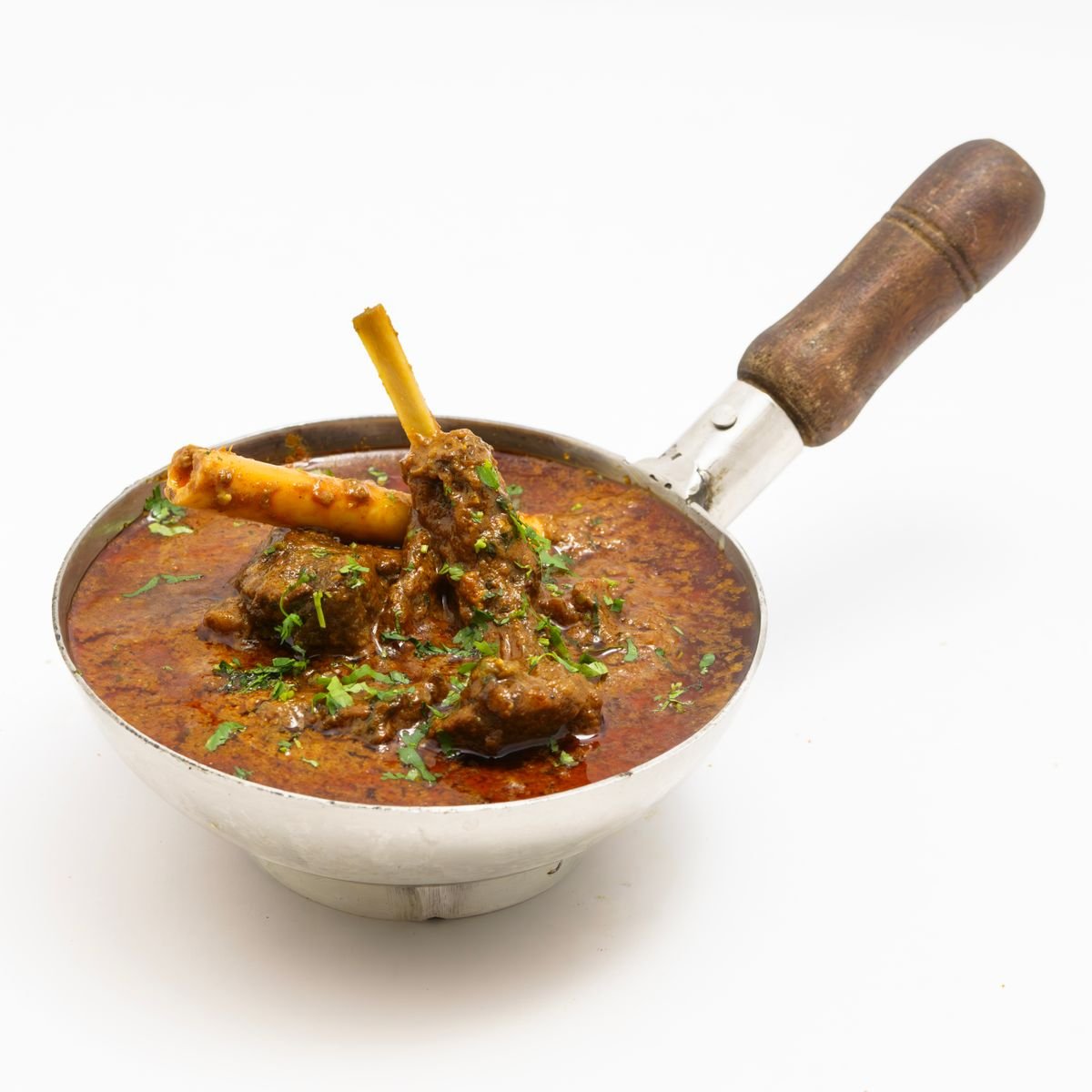
Mutton Dalcha Recipe

Mutton dalcha is a Hyderabadi treasure: tender mutton simmered with lentils, bottle gourd and tamarind into a thick, tangy curry. It is traditionally served with biryani at weddings. Hearty, sour and utterly satisfying — and it tastes even better the next day.
The story behind Mutton Dalcha
Dalcha comes from Hyderabad, the city of the Nizams, where the cooking is some of the most refined in India. It is a curry built on a simple idea: meat and lentils cooked together until they merge into something thick, tangy and deeply satisfying. The name comes from dal (lentils) and cha (a souring agent — in this case, tamarind), and the dish is defined by that sour note, which cuts through the richness of the mutton and the earthiness of the dal.
In Hyderabad, dalcha is inseparable from biryani. At weddings and celebrations, biryani is always served with a bowl of dalcha on the side — the tangy, soupy curry balances the rich, fragrant rice, and the two dishes together are one of the great pairings of Indian cooking. A Hyderabadi wedding without dalcha is unthinkable, and the quality of the dalcha is a measure of the cook.
What makes dalcha special is the combination of textures and flavours. The mutton, cooked until tender, falls apart into the dal. The chana dal (split chickpeas) breaks down into a thick, creamy base. The lauki (bottle gourd) softens into the curry, adding body without flavour of its own. And the tamarind brings the sourness that ties it all together — gentle, fruity, and essential. It is a curry that is greater than the sum of its parts.
Cook dalcha on a weekend, when you have time for the pressure cooker and the slow simmer. It takes about an hour and a half, but most of that is hands-off. Serve it with biryani for the classic pairing, or with plain rice and a salad for a simpler meal. Make a big pot — dalcha tastes even better the next day, and it freezes well.
Dalcha is also a dish that shows the Hyderabadi love of sourness. Tamarind appears throughout Hyderabadi cooking — in curries, in chutneys, in rice dishes — and it is used with a confidence that other regions do not always share. The sourness is not a sharp, vinegary note; it is fruity and rounded, and it balances the richness of meat and ghee in a way that nothing else can. Once you have tasted a well-made dalcha, you understand why Hyderabadis are so devoted to tamarind.
- Prep time
- 20 mins
- Cook time
- 75 mins
- Total time
- 95 mins
- Servings
- 4 servings
- Calories
- 560
Ingredients
- 500 g mutton, bone-in
- 1 cup chana dal, soaked 30 minutes
- 1 cup lauki (bottle gourd), cubed
- 1 onion, sliced
- 2 tomatoes, chopped
- 3 garlic cloves, minced
- 1 tablespoon grated ginger
- 2 tablespoons oil
- 1 teaspoon cumin seeds
- 1 teaspoon coriander powder
- 1/2 teaspoon turmeric
- 1 teaspoon red chilli powder
- 2 tablespoons tamarind pulp
- 1 teaspoon garam masala
- Salt, to taste
- Fresh coriander and mint, to serve
Instructions
- Soak the chana dal in plenty of water for 30 minutes, then drain. Soaking helps the dal cook evenly with the mutton and break down into the thick, creamy base that defines dalcha. While the dal soaks, prepare the rest: cube the lauki, slice the onion, chop the tomatoes, and mince the garlic and ginger.
- Put the bone-in mutton, soaked chana dal, turmeric and salt in a pressure cooker with enough water to cover. Cook for 4 whistles (about 20-25 minutes) until the mutton is tender and the dal is soft and starting to break down. Let the pressure release naturally. The mutton should yield easily to a fork, and the dal should be soft enough to mash.
- While the mutton cooks, make the masala base. Heat the oil in a large, heavy pan over medium heat. Add the cumin seeds and fry for 30 seconds until they crackle. Add the sliced onion and cook for 6-7 minutes, stirring often, until deep golden. The onion needs good colour — it is the base of the curry's sweetness.
- Add the grated ginger, minced garlic and chopped tomatoes to the pan. Cook for 5 minutes, stirring often, until the tomatoes break down and the mixture thickens into a masala. The oil should start to separate at the edges — that is the sign the masala is cooked through.
- Stir in the coriander powder, red chilli powder and cubed lauki. Cook for 3 minutes, turning the lauki so it is coated in the masala. The lauki will soften in the curry, but a brief fry first helps it hold its shape and absorb the spices.
- Add the cooked mutton and dal to the pan, along with their cooking liquid. Stir well, scraping the bottom of the pan to combine everything. Bring to a gentle simmer and cook for 15 minutes, stirring now and then. The curry should thicken as the dal breaks down further — mash a few spoonfuls of dal against the side of the pan to help it along.
- Stir in the tamarind pulp and garam masala. Simmer for 5 more minutes, letting the flavours come together. Taste and adjust: the dalcha should be gently tangy, not sharply sour. If it needs more tang, add a little more tamarind; if it is too sour, a pinch of sugar or jaggery balances it. Season with salt.
- Garnish generously with fresh coriander and mint, and serve hot with rice or biryani. Dalcha is traditionally served in a bowl alongside the biryani, so people can spoon it over the rice as they eat. A wedge of lemon on the side is a good addition for anyone who wants more tang.
Pro tips
- Soak the chana dal well so it cooks evenly with the mutton. Thirty minutes is the minimum; an hour is better. Unsoaked dal cooks unevenly and stays hard in the centre while the mutton overcooks.
- Mash a few spoonfuls of dal against the side of the pan to thicken the curry. The dal is the thickener — the more you mash, the thicker the dalcha. Leave some whole for texture, and mash the rest for body.
- Adjust the tamarind to your taste; it should be gently tangy, not sour. Tamarind varies in strength, so add it gradually and taste as you go. A pinch of sugar or jaggery balances the sourness if you overshoot.
- Dalcha tastes even better the next day, so make it ahead if you can. The flavours deepen overnight and the dal thickens further. Reheat gently with a splash of water if it has gone too thick.
- Use bone-in mutton — the bones add flavour and body to the curry during the pressure-cooking. Boneless mutton works, but the curry will be thinner and less rich. The bones also make the dish more satisfying to eat.
Variations & serving ideas
The meat can change. Chicken dalcha is quicker — pressure-cook the chicken and dal for 2 whistles instead of 4, as chicken cooks faster. Beef works well too, though it needs longer in the pressure cooker. For a vegetarian version, use extra dal and vegetables, and add a little more tamarind for depth.
The vegetables can change with the seasons. Brinjal (aubergine), cut into chunks, softens beautifully in dalcha and adds an earthy depth. Drumsticks (moringa pods) are a traditional addition in some parts of South India. Pumpkin, cubed, melts into the curry and thickens it further.
The souring agent can vary. Tamarind is traditional, but kokum (a sour fruit from the west coast) gives a different, more floral sourness. A squeeze of lemon juice at the end adds brightness. Raw mango, grated and added with the tomatoes, gives a seasonal sourness that is wonderful in summer.
Serve dalcha with Hyderabadi biryani for the classic wedding pairing, or with plain steamed rice, roti or paratha. A simple cucumber raita on the side cools the palate, and a salad of onion, tomato and lemon adds freshness. It is a complete meal with rice alone.
For a special occasion, garnish the finished dalcha with fried onions — thinly sliced onions, fried until crisp and golden, scattered over the top just before serving. The crunch and sweetness of the fried onions add another layer to the dish, and they look beautiful. A few whole dried red chillies, fried in ghee and placed on top, add colour and a gentle warmth.
Getting it right
The key technique is the pressure-cook. Mutton and chana dal go in together, with turmeric and salt, and cook under pressure until the meat is tender and the dal is soft enough to break down. Four whistles is the guide, but the real test is the fork: the mutton should yield easily, and the dal should mash against the side of the pot. Undercooked dal stays hard and gritty; properly cooked dal melts into the curry.
The masala base is the second key. Onions cooked until deep golden, tomatoes cooked until the oil separates, spices fried briefly — the same foundation as any good curry. The lauki goes in with the spices so it absorbs their flavour before the mutton and dal join the pan. The tamarind goes in last, so its sourness stays bright and does not cook away.
The common mistakes are under-soaking the dal and over-souring with tamarind. Unsoaked chana dal cooks unevenly and stays hard. And tamarind is potent — add it gradually, taste, and adjust. A dalcha that is too sour is hard to fix, though a pinch of sugar or jaggery helps. Gentle tang is the goal, not sharp sourness.
The finishing touches matter. The tamarind goes in near the end so its sourness stays bright — tamarind added too early cooks down and loses its fruity edge. The garam masala goes in with it, for the same reason: its warm, fragrant notes fade with long cooking. And the fresh coriander and mint, scattered over the top just before serving, add a green freshness that the long-cooked curry needs.
Storing & reheating
Dalcha keeps for 3-4 days in the fridge in a covered container, and it tastes even better the next day — the flavours deepen and the dal thickens. Reheat gently in a pot over low heat, adding a splash of water if it has gone too thick. Stir well so the dal does not stick to the bottom.
It freezes well for up to 3 months. Freeze in portions, thaw overnight in the fridge, and reheat gently. The lauki softens further on thawing, but the flavour holds up. The mutton and dal freeze beautifully — dalcha is one of the best curries for batch cooking and freezing.
Frequently asked questions
What is mutton dalcha?
It is a Hyderabadi curry of mutton cooked with chana dal, bottle gourd and tamarind, traditionally served with biryani. The name comes from dal (lentils) and cha (souring agent). It is thick, tangy and deeply satisfying.
What is lauki?
Lauki, or bottle gourd, is a mild, pale green vegetable that softens beautifully in curries. It has very little flavour of its own, but it absorbs the spices around it and adds body to the dish. It is available at Indian grocery shops.
Can I make dalcha with chicken?
Yes. Chicken cooks faster, so reduce the pressure-cooking time to 2 whistles. The chicken will be tender and the dal will be soft. Bone-in chicken gives the best flavour, just as bone-in mutton does.
Can I make dalcha without a pressure cooker?
Yes. Simmer the mutton and dal in a covered pot for about 90 minutes until tender. Add more water as needed, and check the mutton with a fork — it should yield easily. The pressure cooker is faster, but the pot works fine.
Why is my dalcha too sour?
Too much tamarind, or tamarind that is very strong. Add it gradually and taste as you go. A pinch of sugar or jaggery balances excess sourness. Next time, start with less tamarind and add more only if the curry needs it.
What do I serve with dalcha?
Hyderabadi biryani is the classic pairing — dalcha is always served alongside biryani at weddings. Plain steamed rice, roti or paratha all work too. A cucumber raita and a simple salad complete the meal.