Daal Fry Recipe
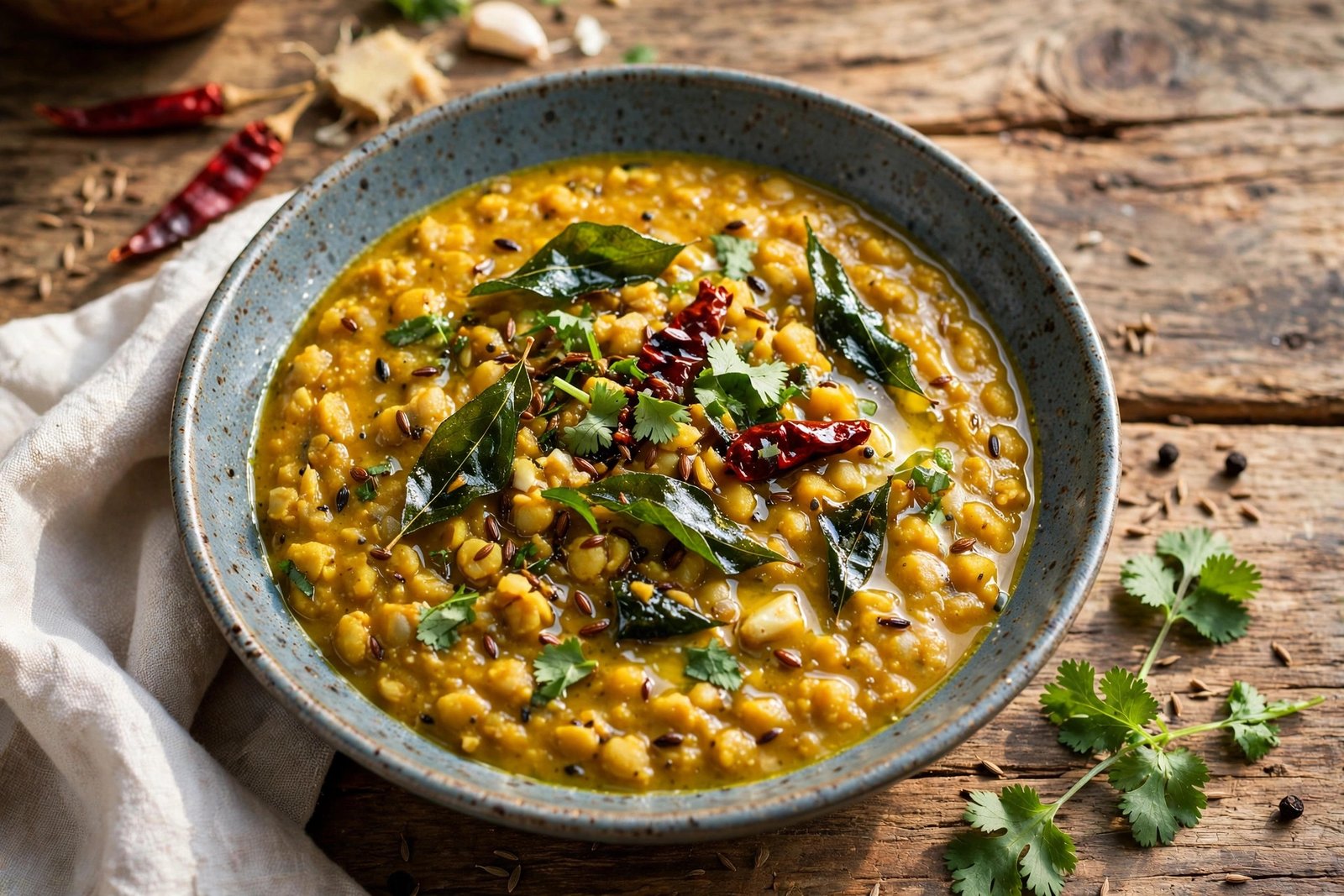
Creamy yellow lentils finished with a sizzling tarka of garlic, cumin and dried chillies: daal fry is the everyday comfort dish at the heart of desi home cooking. The lentils are soft and creamy, the tarka adds a smoky, garlicky aroma, and the whole dish is simple, nourishing and deeply satisfying. It is the dish that every desi cook learns first, and the one that never gets old.
The story behind Daal Fry
Daal fry is the everyday comfort dish at the heart of desi home cooking, a bowl of creamy yellow lentils finished with a sizzling tarka of garlic, cumin and chillies. It is the dish that every desi cook learns first, the one that appears on the table several times a week, and the one that tastes like home. It is simple, nourishing and deeply satisfying, and it never gets old.
Lentils have been eaten in India for thousands of years, and daal is the foundation of the Indian diet, providing protein, fibre and comfort to millions of people. The word daal refers to both the lentil itself and the dish made from it, and there are countless varieties, from the creamy toor dal used here to the red masoor, the green moong, and the black urad. Each region, each family, has its own way of cooking daal.
What makes daal fry special is the tarka, the tempering of spices in hot ghee that is poured over the cooked lentils at the end. The tarka is a technique that appears throughout Indian cooking, and it is transformative: the hot fat extracts the flavour from the spices and carries it into the dish, while the sizzle and the aroma signal that the meal is ready. A daal without a tarka is plain; a daal with a tarka is a feast.
Cook daal fry when you want a meal that is simple, healthy and comforting. It takes 40 minutes from start to finish, uses pantry ingredients, and feeds a family. Serve it with steamed rice or roti, with a spoonful of pickle on the side, and enjoy the creamy lentils with the smoky, garlicky tarka in every bite. It is a dish that proves how much flavour can come from so little.
The asafoetida in daal fry, called hing in Hindi, is a pungent resin that smells strongly of onion and garlic when raw, but transforms when cooked in hot fat, adding a deep, savoury umami that is hard to describe. It is used in tiny quantities, just a pinch, and it is a staple of Indian vegetarian cooking, where it adds the depth that meat would otherwise provide.
In India, daal is eaten at almost every meal, and it is the dish that sustains the country. It is cheap, nutritious, and endlessly variable, and it provides protein to millions of people who eat little or no meat. A pot of daal, a pile of rice, and a few rotis is a complete meal, and it is the meal that most Indians grow up eating. Daal fry is the simplest version of this essential dish, and it is the one that every cook should know.
- Prep time
- 10 mins
- Cook time
- 30 mins
- Total time
- 40 mins
- Servings
- 4 servings
- Calories
- 360
Ingredients
- 250 g toor dal (split pigeon peas), rinsed
- 1 litre water
- 1/2 teaspoon turmeric
- 1 medium onion, finely chopped
- 2 tomatoes, chopped
- 2 garlic cloves, minced, plus 4 cloves sliced for the tarka
- 1 teaspoon grated ginger
- 1 teaspoon cumin seeds
- 2 dried red chillies
- 1/2 teaspoon asafoetida (hing), optional
- 2 tablespoons ghee or oil
- 1 teaspoon garam masala
- Salt to taste
- Steamed rice or roti, to serve + Fresh coriander, to garnish
Instructions
- Start by rinsing the toor dal in several changes of cold water until the water runs clear. This removes excess starch and any dust. Drain the dal well and put it in a large pot with the water and turmeric.
- Bring the dal to a boil over high heat, skimming off any foam that rises to the surface. The foam is harmless, but removing it gives a cleaner, clearer dal. Reduce the heat and simmer for 25 minutes, until the lentils are completely soft and falling apart.
- While the dal cooks, heat half the ghee in a pan over medium heat and cook the finely chopped onion until golden, about 6 minutes. The onion should be soft and sweet, with golden edges, not browned or burnt.
- Add the minced garlic and grated ginger to the pan and cook for 1 minute, until fragrant. Add the chopped tomatoes and cook for 5 minutes, stirring, until the tomatoes are soft and jammy and the mixture has thickened.
- Whisk the cooked dal lightly with a whisk or a hand blender, just enough to make it creamy without turning it into a puree. The dal should be thick and spoonable, with some texture remaining. If it is too thick, add a splash of hot water.
- Stir the onion-tomato mixture into the dal with the garam masala and salt. Simmer for 5 minutes, stirring occasionally, so the flavours meld together. Taste and adjust the salt: the dal should taste savoury and warm, with the sweetness of the onion and the tang of the tomato.
- For the tarka, heat the remaining ghee in a small pan over medium-high heat until hot. Add the sliced garlic and fry until just golden, about 30 seconds, watching carefully as garlic burns quickly. The garlic should be golden, not brown.
- Add the cumin seeds, dried red chillies and asafoetida, if using, to the hot ghee and let them sizzle for 20 seconds. The cumin will crackle and the chillies will darken slightly. The kitchen should smell incredible.
- Pour the sizzling tarka over the dal immediately, letting it hiss as it hits the surface. Cover the pot with a lid for 2 minutes so the aroma infuses into the dal. This step traps the smoky fragrance and is essential to the dish.
- Remove the lid, stir the dal gently to distribute the tarka, and garnish with fresh coriander. Serve hot with steamed rice or roti, and enjoy the creamy lentils with the smoky, garlicky tarka in every spoonful.
Pro tips
- Whisking the cooked dal gives a creamy texture without adding cream. A few pulses with a hand blender work too, but do not over-blend.
- Fry the garlic for the tarka until just golden; burnt garlic turns bitter fast. Watch it carefully, as it goes from golden to burnt in seconds.
- Cover the dal right after pouring the tarka to trap the smoky aroma. Two minutes under the lid makes a real difference to the flavour.
- Rinse the dal well before cooking to remove excess starch. This gives a cleaner, clearer dal that is less likely to boil over.
- Use ghee for the tarka if you can. Ghee has a nutty, rich flavour that oil cannot match, and it is traditional in this dish.
Variations & serving ideas
The lentils in daal fry can change. Masoor dal, the red lentil, cooks faster, about 15 minutes, and gives a softer, creamier dal. Moong dal, the yellow split mung bean, is light and easy to digest. A mix of toor and masoor gives a rich, complex flavour. Each lentil changes the character of the dish.
The tarka can vary too. A South Indian tarka, with mustard seeds, curry leaves and dried red chillies, gives a different, fragrant flavour. A tarka with sliced onion, fried until crisp, adds sweetness and crunch. A tarka with ginger and green chillies, instead of garlic, is lighter and fresher.
The vegetables can be added. Spinach, wilted into the dal, makes palak daal, which is rich and green. Bottle gourd, cooked with the lentils, adds a mild sweetness. Tomatoes, added in larger quantity, make the dal tangier and more colourful.
For serving, daal fry is traditionally eaten with steamed rice or roti, with a spoonful of pickle and a little yoghurt on the side. It is a complete meal on its own, but it also works as part of a larger spread, alongside a vegetable curry, a salad and some papadums. A glass of lassi or a cup of chai is the natural drink. Keep the meal simple and let the creamy, fragrant dal be the star.
For a restaurant-style daal fry, add a spoonful of cream or butter at the end, stirred through the dal just before serving. The cream enriches the dal and gives it a luxurious, silky texture. A squeeze of lemon juice at the end brightens the flavours and balances the richness.
Getting it right
The key technique in daal fry is cooking the lentils until they are completely soft. Toor dal needs about 25 minutes of simmering, until the lentils are falling apart and the dal is thick and creamy. Undercooked dal is grainy and unpleasant, while properly cooked dal is smooth and comforting. A pressure cooker speeds this up, but a pot on the stove works just as well.
The tarka is the second skill, and timing is everything. The garlic must be fried until just golden, not brown, as burnt garlic turns bitter fast. The cumin seeds and chillies sizzle for just 20 seconds, long enough to release their aroma but not so long that they burn. The tarka should be poured over the dal immediately, while it is still sizzling, and the pot should be covered to trap the aroma.
The most common mistake is not whisking the dal after cooking, which leaves it grainy and thin. A light whisking, or a few pulses with a hand blender, gives a creamy texture without adding cream. Another common slip is using too little salt, which makes the dal taste flat. Lentils need generous seasoning to taste their best.
The consistency of daal fry is personal. Some cooks prefer a thick dal that holds its shape on a spoon, while others prefer a thinner dal that pours like a soup. Add hot water to thin the dal, or simmer it uncovered to thicken it. The dal should be thick enough to coat rice or cling to roti, but not so thick that it is stiff.
Storing & reheating
Daal fry keeps in the fridge for up to four days in a sealed container, and the flavour actually improves overnight as the spices meld. It also freezes well for up to three months, making it an excellent meal-prep dish.
To reheat, warm the dal gently in a pot over low heat, adding a splash of water if it has thickened too much. The dal will thicken as it sits, as the lentils continue to absorb water. For the best result, make a fresh tarka and pour it over the reheated dal, which restores the smoky, garlicky aroma that fades in storage.
Daal fry is an excellent meal-prep dish, as it keeps well in the fridge and freezes beautifully. Make a double batch on the weekend, portion it into containers, and freeze for up to three months. Thaw overnight in the fridge and reheat gently, making a fresh tarka to pour over the top.
Frequently asked questions
What is the difference between daal fry and daal tadka?
They are essentially the same dish; tadka and fry both refer to the tempered spices poured over cooked lentils at the end. The names are used interchangeably across different regions of India and Pakistan.
Can I use other lentils?
Yes. Masoor (red) lentils cook faster, about 15 minutes, and moong dal also works well with the same method. Each lentil gives a slightly different texture and flavour.
Can I make daal fry in a pressure cooker?
Yes. Cook the dal with turmeric for 3 whistles, then finish with the onion-tomato base and tarka as written. The pressure cooker makes the dal even creamier.
Is daal fry vegan?
With oil instead of ghee, yes, and it is naturally high in protein and fibre. Daal fry is one of the most nutritious dishes in Indian cooking, and it is completely plant-based with oil.
What is a tarka?
The tarka is the tempering of spices in hot ghee or oil, poured over the cooked dal at the end. It adds aroma, flavour and a smoky depth that transforms the simple lentils into something special.
Can I freeze daal fry?
Yes, daal fry freezes well for up to three months. Thaw it in the fridge overnight and reheat gently, adding a splash of water if it has thickened. Make a fresh tarka to pour over the reheated dal.


