Jiaozi Recipe
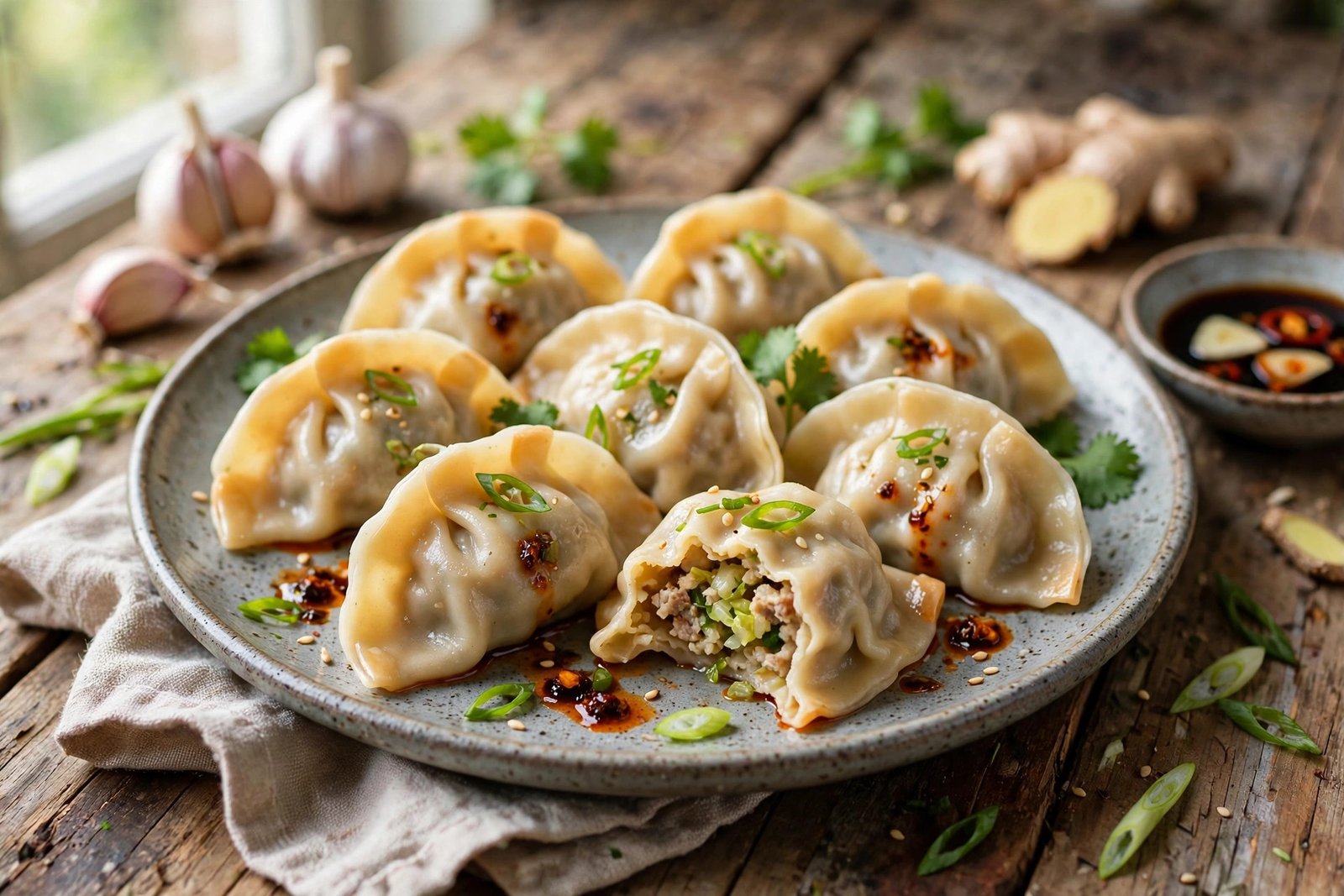
Golden on the bottom, tender on top and juicy inside, jiaozi are the dumplings every Chinese family gathers to make. This recipe makes a generous, freezer-friendly batch of thirty — and the folding is half the fun.
The story behind Jiaozi
Jiaozi are nearly two thousand years old. Legend says they were invented in the Eastern Han dynasty by Zhang Zhongjing, a physician who made dumplings shaped like ears — filled with mutton, chilli and herbs — to treat frostbitten ears in a bitter winter, and called them tender ears. Whether or not the story is true, jiaozi have been made in China ever since, and they have become the country's most beloved dumpling, eaten at family gatherings, at festivals, and above all at Chinese New Year.
What makes them special is the potsticker method: fried on the bottom until golden and crisp, steamed on top until tender, and juicy inside. The filling — pork mince, Chinese cabbage, spring onions, ginger, soy and sesame oil — is savoury and fragrant, and the handmade wrapper, rolled thin from a simple flour-and-water dough, is chewy and tender. A jiaozi eaten straight from the pan, dipped in black vinegar and chilli oil, is one of the great pleasures of Chinese cooking.
In China, making jiaozi is a family event. At Chinese New Year, families gather around a table covered in flour, rolling wrappers, spooning filling, and pleating dumplings together — and the dumplings are eaten at midnight, because their shape resembles silver ingots, the old Chinese money, and eating them is said to bring prosperity in the new year. A coin hidden in one dumpling brings luck to whoever finds it. The folding is a skill passed from grandparents to grandchildren, and every family has its own pleating style.
The wrapper is worth making from scratch. Flour and warm water, kneaded for eight minutes until smooth, rested for thirty minutes, rolled into a rope, cut into thirty pieces, and rolled into thin circles — it sounds like work, and it is, but the homemade wrapper is chewier and more tender than any shop-bought one, and it seals better too. Shop-bought wrappers are a fine shortcut, and they are what most busy families use, but the homemade wrapper is the real thing.
This recipe makes thirty dumplings and serves four, and it takes about an hour, most of it folding. It needs plain flour, pork mince, Chinese cabbage, and ginger — the ingredients are simple, and the work is in the hands. Make it on a weekend, with help if you can get it, and freeze the extras. A freezer full of jiaozi is a gift to your future self.
- Prep time
- 45 mins
- Cook time
- 15 mins
- Total time
- 60 mins
- Servings
- 4 servings
- Calories
- 450
Ingredients
- 350 g plain flour
- 180 ml warm water
- 400 g pork mince
- 300 g Chinese cabbage, finely chopped
- 3 spring onions, finely chopped
- 1 tbsp fresh ginger, grated
- 2 tbsp soy sauce
- 1 tbsp Shaoxing wine
- 1 tbsp sesame oil
- 1 tsp salt
- 1/2 tsp white pepper
- 3 tbsp vegetable oil, for frying
- Chilli oil and black vinegar, to serve
Instructions
- Mix the flour and warm water in a large bowl, stirring with chopsticks or a fork until a shaggy dough forms. Turn it out onto a lightly floured surface and knead for 8 minutes, until the dough is smooth and elastic. Cover it with a damp cloth or cling film and rest it for 30 minutes — the rest relaxes the gluten and makes the dough easy to roll.
- While the dough rests, prepare the cabbage. Finely chop the Chinese cabbage, toss it with the salt, and rest it for 10 minutes. The salt draws water out of the cabbage. Then squeeze the cabbage very dry in a clean tea towel, wringing out as much water as you can — wet cabbage makes a watery filling, and watery filling splits the dumplings.
- Combine the pork mince, the squeezed cabbage, the finely chopped spring onions, the grated ginger, the soy sauce, the Shaoxing wine, the sesame oil and the white pepper in a large bowl. Mix well with chopsticks or your hands, stirring in one direction, until the filling is sticky and well combined. The one-direction mixing develops the meat's texture and makes the filling springy.
- Roll the rested dough into a long rope, about 2 cm thick, and cut it into 30 equal pieces. Keep the pieces covered with a damp cloth so they do not dry out. Roll each piece into a thin circle, about 10 cm across, with a small rolling pin — the edges should be slightly thinner than the centre, so the dumpling seals well and the bottom is sturdy.
- Place a spoonful of filling — about a tablespoon — in the centre of each wrapper. Do not overfill; an overfilled dumpling will not seal and will burst in the pan. Fold the wrapper in half over the filling, pinch the top centre to seal, then pleat one side, folding small tucks towards the centre, and press the edges together firmly to seal.
- Heat the vegetable oil in a large, heavy frying pan over a medium-high heat. Arrange the dumplings flat side down in the pan, in a single layer, without crowding them — fry in batches if you need to. Fry for 2 minutes, until the bottoms are golden and crisp. Do not move them while they fry, or the bottoms will not crisp properly.
- Pour 80 ml of water into the pan — it will sizzle and steam dramatically, so stand back — and cover the pan immediately with a tight-fitting lid. Steam the dumplings for 6 minutes, until the wrappers are tender and translucent and the filling is cooked through. The steam cooks the tops while the bottoms stay crisp.
- Remove the lid and fry for 1 more minute, until the water has evaporated and the bottoms are crisp again. Slide the dumplings onto a plate, crisp side up, and serve immediately with black vinegar, chilli oil and a little soy sauce for dipping. Eat them hot, while the bottoms are still crisp.
Pro tips
- Squeeze the cabbage very dry, or the filling will be watery and the dumplings will split. Salt the cabbage, rest it for 10 minutes, then wring it out in a clean tea towel until no more water comes out. The drier the cabbage, the better the filling — wet filling is the most common cause of burst dumplings.
- Keep the wrappers covered with a damp cloth so they do not dry out while you fold. A dried-out wrapper cracks when you fold it and will not seal. Work with one wrapper at a time, and keep the rest covered — the dough dries faster than you think.
- Do not crowd the pan; fry in batches so the bottoms crisp properly. A crowded pan drops the temperature and the dumplings steam instead of frying, giving you pale, soft bottoms. Leave a little space between each dumpling, and fry in two batches if your pan is small.
- Freeze raw dumplings on a tray first, then bag them for easy weeknight cooking. Arrange the folded dumplings on a baking tray lined with baking paper, freeze until solid, then transfer them to a sealed bag. They cook straight from frozen — just add 2 minutes to the steaming time.
- Seal the edges well, pressing firmly all the way around. A dumpling with a gap in its seal will leak filling into the pan and fall apart. If the wrapper is dry and will not stick, dab the edge with a little water before pressing it shut — the water acts as glue.
Variations & serving ideas
Boiled jiaozi, or shuijiao, are the classic alternative: drop the dumplings into a large pot of boiling water and cook for 5 minutes, until they float and the wrappers look translucent. Boiled jiaozi are softer and more delicate than potstickers, and they are served in a bowl with a little of their cooking water and a dipping sauce on the side.
Steamed jiaozi, or zhengjiao, are cooked in a bamboo steamer lined with baking paper for 8 minutes, until the wrappers are translucent and the filling is cooked through. Steaming gives the most delicate result of all — the wrappers stay soft and tender, and the filling stays juicy. It is the healthiest way to cook jiaozi, and the prettiest.
For a vegetarian filling, use crumbled firm tofu, finely chopped mushrooms and extra cabbage, with the same seasonings — soy, ginger, sesame oil and white pepper. The tofu should be pressed dry and crumbled small, and the mushrooms should be cooked first to drive off their water, or the filling will be wet.
Chicken or shrimp fillings are popular too: minced chicken with Chinese cabbage and ginger, or chopped shrimp with pork mince in a 50-50 mix, which is a classic combination. The shrimp adds sweetness and a springy texture, and the pork keeps the filling juicy. Season them the same way.
Japanese gyoza are jiaozi's close cousins, with thinner wrappers and more garlic in the filling. If you prefer a thinner wrapper, roll the dough a little thinner, or use shop-bought gyoza wrappers, which are round and thin. The folding and cooking method is the same, and the result is a lighter, more delicate dumpling.
Getting it right
The dough is the first technique, and it is about kneading and resting. Eight minutes of kneading, until the dough is smooth and elastic, then thirty minutes of resting under a damp cloth, gives you a dough that rolls easily and holds its shape. An under-kneaded dough tears; an under-rested dough springs back when you roll it. The rest is not optional — it relaxes the gluten and makes the rolling easy.
The filling is the second skill, and it is about dryness. The cabbage must be salted and squeezed very dry, the pork and seasonings mixed in one direction until sticky, and the filling spooned in modest amounts — a tablespoon per dumpling. A wet filling splits the dumplings; an overfilled dumpling will not seal. Dry filling, modest portions, firm seals.
The most common mistakes are split dumplings, tough wrappers, and soggy bottoms. Split dumplings mean the filling was wet or the dumpling was overfilled — squeeze the cabbage drier and use less filling. Tough wrappers mean the dough was under-rested — rest it for the full 30 minutes. And soggy bottoms mean the pan was crowded or the oil was not hot enough — fry in batches, and let the bottoms crisp before adding the water.
Storing & reheating
Raw jiaozi freeze beautifully. Arrange them on a baking tray lined with baking paper, freeze until solid, then transfer them to a sealed bag for up to 3 months. Cook them straight from frozen, using the same fry-steam-fry method, adding 2 minutes to the steaming time.
Cooked jiaozi keep for 2 days in the fridge in a sealed container. Reheat them in a frying pan with a little oil over a medium heat, until the bottoms crisp again — do not microwave them, or the wrappers go soggy. The dipping sauce keeps for a week in the fridge in a sealed jar.
Frequently asked questions
What is the difference between jiaozi and gyoza?
They are close cousins. Jiaozi are the Chinese original, usually with thicker wrappers, while Japanese gyoza are typically thinner and more garlicky. The folding and cooking method is the same, and the two are often confused — gyoza came to Japan from China, and the Japanese adapted it to their own taste.
Can I boil jiaozi instead of frying?
Yes, boil them in plenty of water for 5 minutes until they float and the wrappers look translucent. This is called shuijiao. Boiled jiaozi are softer and more delicate than potstickers, and they are served in a bowl with a little of their cooking water and a dipping sauce.
What dipping sauce goes with jiaozi?
Black vinegar with a little soy sauce and chilli oil is classic. Add shredded ginger for extra freshness. The vinegar's tang cuts through the richness of the pork, and the chilli oil adds warmth. Mix the sauce to your taste — more vinegar for tang, more chilli for heat.
Can I make the filling vegetarian?
Yes, use crumbled firm tofu, mushrooms and extra cabbage with the same seasonings. The tofu should be pressed dry and crumbled small, and the mushrooms should be cooked first to drive off their water. The vegetarian filling is just as satisfying as the pork version.
Can I use shop-bought wrappers?
Yes, shop-bought dumpling wrappers save a lot of time and work well. They are slightly thinner than homemade wrappers, so handle them gently and do not overfill. Keep them covered with a damp cloth while you fold, and seal the edges with a dab of water if they are dry.
Why do my dumplings burst in the pan?
Bursting usually means the filling was too wet, the dumpling was overfilled, or the seal was not firm. Squeeze the cabbage very dry, use a tablespoon of filling per dumpling, and press the edges together firmly all the way around. A dab of water on a dry edge helps the seal hold.