Fish-Fragrant Pork Recipe
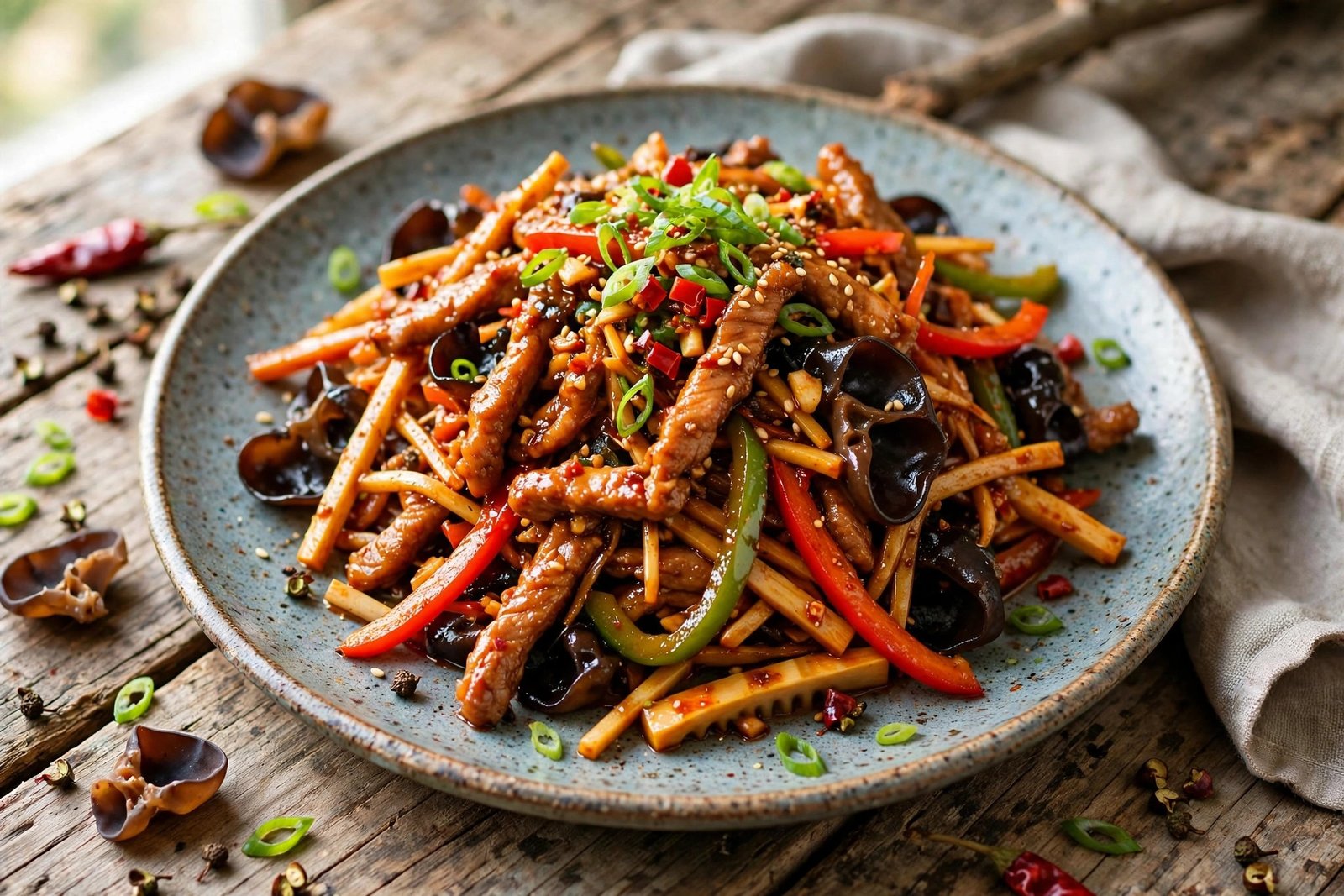
Fish-Fragrant Pork, or Yu Xiang Rou Si, is a Sichuan classic despite containing no fish at all: the name describes its bold sweet, sour and spicy sauce, once used for fish dishes. Tender pork strips, wood ear mushrooms and bamboo shoots, all coated in a glossy sauce, make it irresistible with rice. Fast, fiery and ready in 35 minutes.
The story behind Fish-Fragrant Pork
Yu xiang rou si is one of Sichuan's most famous dishes, and its name confuses everyone the first time they hear it. Yu xiang means fish-fragrant, yet there is no fish anywhere in the recipe. The name refers to the seasoning: a combination of garlic, ginger, spring onion, chilli, vinegar and sugar that was traditionally used to cook fish in Sichuan, removing any fishy smell and leaving a bold, complex flavour. Cooks eventually realised the same seasoning was magnificent on pork, and the name came along for the ride.
Sichuan cooking is famous for its heat, but the real character of the cuisine is balance. A good Sichuan dish is never just hot; it is sweet and sour and salty and spicy all at once, with each flavour sharpening the others. Yu xiang is the textbook example. The sugar rounds out the vinegar, the vinegar cuts through the richness of the pork, and the chilli bean paste brings a deep, fermented warmth that no amount of plain chilli could match.
What makes this dish special is its speed and its texture. The pork is cut into fine strips and stir-fried for just a couple of minutes, so it stays tender and silky. The wood ear mushrooms add a slippery crunch, the bamboo shoots bring a clean, fresh bite, and the sauce coats everything in a glossy sheen. It is a dish that takes 15 minutes to cook but tastes like it took all afternoon.
Cook it when you want a proper takeaway-style meal at home, faster than delivery and far better. It is a weeknight hero: the prep is the only slow part, and once the wok is hot, dinner is minutes away. Serve it with steamed jasmine rice and let the sauce do the talking.
- Prep time
- 20 mins
- Cook time
- 15 mins
- Total time
- 35 mins
- Servings
- 4 servings
- Calories
- 480
Ingredients
- 400 g pork loin, cut into thin strips
- 1 tablespoon light soy sauce
- 1 tablespoon Shaoxing wine
- 1 tablespoon cornflour
- 2 tablespoons vegetable oil
- 3 garlic cloves, minced
- 1 tablespoon grated ginger
- 2 spring onions, chopped
- 50 g wood ear mushrooms, soaked and sliced
- 50 g bamboo shoots, julienned
- 2 tablespoons Chinkiang black vinegar
- 1 tablespoon sugar
- 1 tablespoon chilli bean paste (doubanjiang)
- 1 teaspoon sesame oil
Instructions
- Cut the pork loin across the grain into thin strips, about 5 mm wide and 5 cm long. Cutting across the grain shortens the muscle fibres and keeps the meat tender; cutting with the grain gives you chewy strips no matter how well you cook them. If the pork is hard to slice thin, pop it in the freezer for 20 minutes first to firm it up.
- Toss the pork strips with the light soy sauce, Shaoxing wine and cornflour, and leave to marinate for 15 minutes. The cornflour coats the strips in a thin layer that protects them in the hot wok and gives the sauce something to cling to. This is the velveting step, and it is what makes stir-fried meat silky instead of dry.
- While the pork marinates, mix the sauce: the Chinkiang black vinegar, sugar, chilli bean paste and 2 tablespoons of water, stirred until the sugar dissolves. Taste it now. It should be sweet, sour and spicy in roughly equal measure, with a deep, savoury backbone from the bean paste. Adjust the sugar or vinegar to your liking before cooking starts.
- Get everything ready before you light the wok. Mince the garlic, grate the ginger, chop the spring onions, slice the soaked wood ear mushrooms and julienne the bamboo shoots. Have the sauce, the pork and the sesame oil all within arm's reach. Wok cooking moves fast, and there is no time to chop once the oil is hot.
- Heat the vegetable oil in a wok over high heat until it shimmers and just starts to smoke. Add the pork in a single layer and let it sit undisturbed for 30 seconds so it sears, then stir-fry for 2-3 minutes until just cooked through and lightly browned at the edges. Remove the pork to a plate and set aside.
- Add the garlic, ginger and spring onions to the same wok, with a little more oil if the pan looks dry. Stir-fry for 30 seconds until fragrant, when the smell hits you and the garlic just starts to colour. Do not let the garlic brown: it turns bitter fast at this heat.
- Add the wood ear mushrooms and bamboo shoots and stir-fry for 1 minute, tossing constantly. They should stay crisp and bright, just warmed through. Then pour in the sauce and let it bubble for 30 seconds, stirring, until it thickens slightly and turns glossy.
- Return the pork to the wok and toss everything together for 1-2 minutes, until every strip is coated in the glossy sauce and the pork is heated through. The sauce should cling to the meat rather than pooling at the bottom of the wok. If it looks dry, add a splash of water; if it looks thin, cook for another 30 seconds.
- Take the wok off the heat and drizzle over the sesame oil, tossing once more. The sesame oil goes in last, off the heat, so its nutty aroma stays bright. Serve immediately over steamed jasmine rice, while the pork is still sizzling hot and the sauce is glossy.
Pro tips
- Cut the pork across the grain into thin strips so it stays tender. Thick strips overcook on the outside before the inside is done, and strips cut with the grain stay chewy no matter how carefully you cook them.
- Have every ingredient ready before you start; wok cooking moves fast. Once the oil is hot, you have about 5 minutes from start to finish, and there is no time to chop garlic or mix sauce with the wok smoking behind you.
- Taste the sauce before adding the pork and adjust the sugar or vinegar to your liking. The balance of sweet, sour and spicy is personal, and it is much easier to fix the sauce on its own than after everything is mixed together.
- Do not crowd the wok. If you double the recipe, cook the pork in two batches. Too much meat at once drops the temperature and the pork steams in its own juices instead of searing, leaving it grey and rubbery.
- Use a wok if you have one, but a large, heavy frying pan works too. The key is high heat and plenty of surface area. A small pan or a low heat will not give you the sear that makes this dish.
Variations & serving ideas
The protein is easy to swap. Chicken breast or thigh strips work very well with the same sauce and the same cooking time, and thinly sliced beef is delicious too. For a vegetarian version, use firm tofu, pressed and cut into strips, or a mix of mushrooms and extra bamboo shoots. The sauce is the star here, and it flatters almost anything you put it on.
The vegetables are flexible as well. Shredded carrot adds sweetness and colour, and thinly sliced red pepper brings a fresh crunch. Celery, cut on a sharp diagonal, is a classic addition in some Sichuan kitchens. Keep the pieces thin and similar in size so they cook in the same minute or two as the mushrooms and bamboo shoots.
For a hotter version, add a teaspoon of Sichuan peppercorns, toasted and ground, to the sauce. They bring the famous numbing tingle, ma la, that defines Sichuan cooking. For a milder version, halve the chilli bean paste and add a little extra sugar. The dish should always be bold, but the heat level is entirely up to you.
Serve it with steamed jasmine rice, which is the perfect partner for the sauce, and a simple stir-fried green vegetable on the side, like gai lan or pak choi with garlic. A cold beer or a glass of iced tea cuts through the heat. This is also a great dish for a Chinese-style family dinner, served in the middle of the table alongside two or three other dishes.
Getting it right
The key technique here is velveting: coating the pork in cornflour, soy sauce and Shaoxing wine before it hits the wok. The cornflour forms a thin protective layer that keeps the meat moist and silky, even at very high heat, and it gives the finished sauce something to cling to. Fifteen minutes of marinating is enough; any longer and the cornflour starts to go gummy. It is a small step that makes the difference between restaurant-quality stir-fry and dry, tough strips.
Heat control is everything in wok cooking. The wok must be properly hot before the pork goes in, hot enough that the oil shimmers and just starts to smoke. That initial sear is what gives the meat its colour and flavour. If the wok is not hot enough, the pork releases its juices and steams instead of frying. Let the pork sit undisturbed for 30 seconds before you start tossing, so it gets a chance to brown.
The most common mistakes are a crowded wok, a sauce added too early, and overcooked pork. Crowding drops the temperature and steams the meat. Adding the sauce before the aromatics have had their 30 seconds means the garlic never gets to bloom. And pork strips this thin cook in 2-3 minutes; any longer and they dry out. Cook fast, taste the sauce before the pork goes back in, and get it onto the plate while it is still glossy and hot.
Storing & reheating
Leftover fish-fragrant pork keeps in the fridge for up to 3 days in an airtight container, though the sauce will soak into the pork a little and the mushrooms will soften. It reheats well and the flavour actually deepens overnight, as the sauce has more time to work its way into the meat.
To reheat, warm it in a wok or frying pan over medium-high heat for 2-3 minutes, stirring, until heated through. Add a splash of water if the sauce has thickened too much. The microwave works too, but the pork can go rubbery if overheated, so use short bursts and stir between them. Freezing is not ideal: the mushrooms and bamboo shoots go soft and the pork loses its silky texture, so eat it within a few days instead.
Frequently asked questions
Why is it called fish-fragrant?
The sauce uses the same sweet-sour-spicy seasoning once used for fish dishes in Sichuan, though this version has no fish in it. The combination of garlic, ginger, spring onion, chilli, vinegar and sugar was originally used to remove any fishy smell from river fish. Cooks found it worked just as well on pork, and the name stuck.
Can I use chicken instead of pork?
Yes. Chicken breast or thigh strips work very well with the same sauce and the same cooking time. Cut them thin and across the grain, just like the pork, and marinate them the same way. Beef strips are also delicious, and firm tofu makes an excellent vegetarian version.
Is it very spicy?
It has a warm, tingly heat from the chilli bean paste, balanced by the sweetness of the sugar and the sharpness of the vinegar. Reduce the chilli bean paste for a milder version, or add a teaspoon of ground Sichuan peppercorns for the classic numbing tingle. Taste the sauce before cooking and adjust to your liking.
What do I serve with it?
Steamed jasmine rice is the perfect partner for the bold sauce, soaking up every last drop. A simple stir-fried green vegetable on the side, like gai lan or pak choi with garlic, balances the richness. For a family-style Chinese dinner, serve it alongside two or three other dishes in the middle of the table.
What is doubanjiang, and where do I buy it?
Doubanjiang is a fermented chilli bean paste from Sichuan, made from broad beans, chilli and salt. It is deeply savoury, spicy and complex, and there is no real substitute. Find it in Asian grocery stores or the international aisle of large supermarkets. Once opened, it keeps in the fridge for months.
Can I make it without a wok?
Yes. A large, heavy frying pan or skillet works well, as long as you get it properly hot and do not crowd it. The key is high heat and plenty of surface area so the pork sears rather than steams. Cook in batches if your pan is small, and keep everything moving once the sauce goes in.


