Di San Xian Recipe
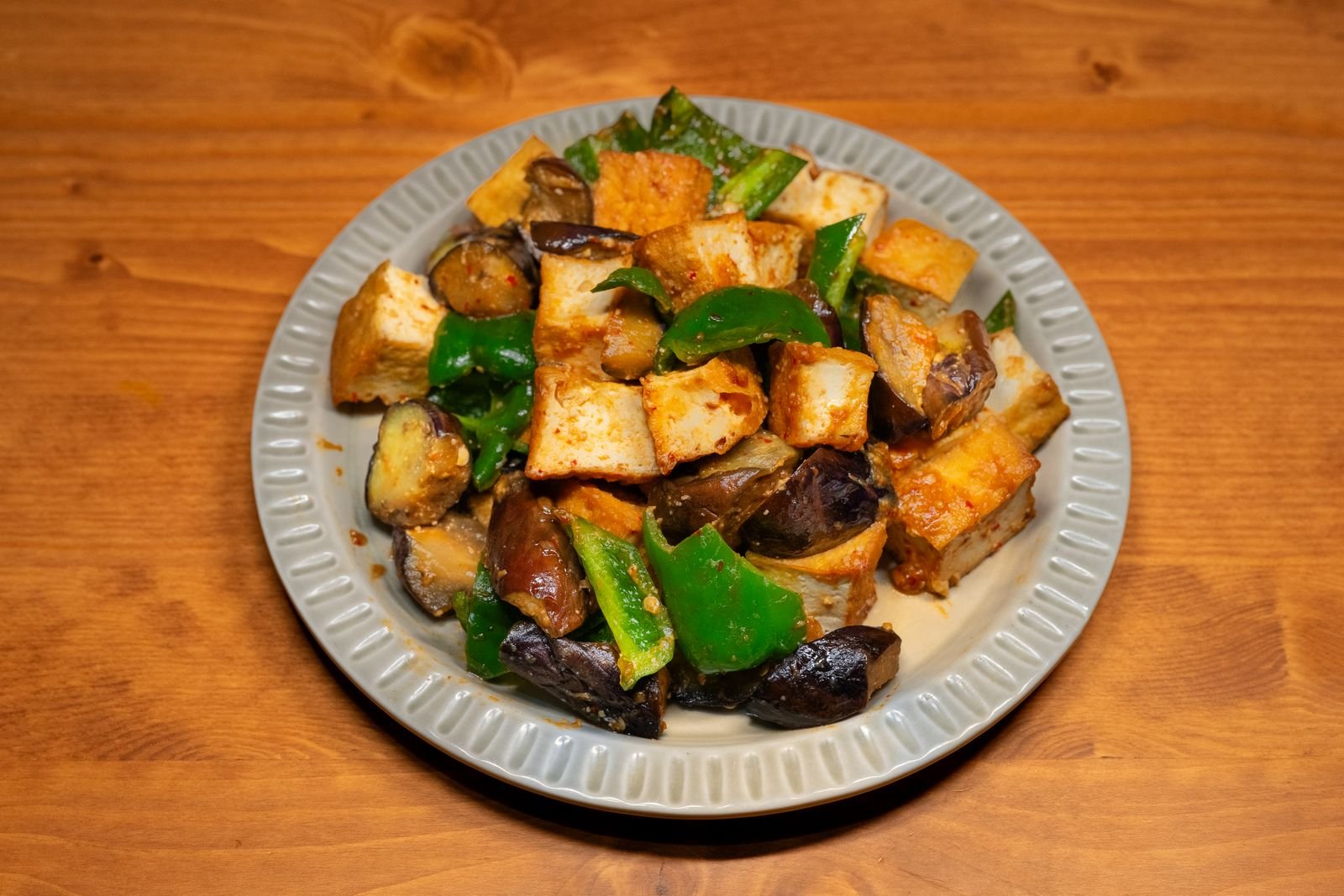
Di san xian means three treasures from the earth, and the treasures are eggplant, potato and green pepper. Each one is fried separately until golden, then tossed together in a light soy and garlic sauce that turns glossy in seconds. It is one of the best-loved vegetable dishes of northeast China: soft, sweet, savory and rich without any meat at all. Serve it with steamed rice and you have a meal that feels generous, comforting and completely satisfying.
The story behind Di San Xian
Di san xian comes from Dongbei, the northeast of China, a region of long winters and big, hearty meals. The name is simple and poetic: di means earth, san means three, and xian means fresh. The three fresh things from the earth are eggplant, potato and green pepper, three vegetables that grow well in the cold northeastern soil. It is a farmer's dish at heart, built from whatever the garden gave that week, and it has become one of the most popular vegetable dishes in all of China.
In Dongbei homes, di san xian is the dish that shows up when the family gathers for a big meal. It sits on the table next to slow-cooked meats and dumplings, and it often disappears first, because it is the one that everyone reaches for. Restaurants in Harbin and Shenyang serve it in generous portions, and the best versions are the ones where each vegetable still tastes like itself, with the sauce tying them together instead of covering them up. The best versions are cooked in a wok over high heat, so the vegetables crisp quickly and the sauce stays light.
What makes the dish special is the contrast. The potato is golden and crisp outside and soft inside. The eggplant collapses into something rich and almost creamy. The green pepper stays bright and a little sharp, cutting through the oil. The sauce is light, just soy, sugar, garlic and a little vinegar, and it turns glossy in seconds. Together they make a dish that is far more than the sum of three humble vegetables.
This is a wonderful dish for a family lunch in Canada, where the ingredients are cheap and easy to find in any supermarket. It suits a cold evening, when you want something warm and filling without meat, and it works just as well as a side dish for a bigger spread. If you have never cooked with eggplant before, this is the recipe to learn it on, because it shows you exactly what the vegetable can do. A wok, a sharp knife and three good vegetables are all you really need.
- Prep time
- 20 mins
- Cook time
- 25 mins
- Total time
- 45 mins
- Servings
- 4 servings
- Calories
- 380
Ingredients
- 1 large eggplant, about 400 g, cut into chunks
- 2 medium potatoes, about 400 g, peeled and cut into chunks
- 1 green bell pepper, deseeded and cut into chunks
- 3 garlic cloves, minced
- 1 tablespoon fresh ginger, minced
- 2 tablespoons light soy sauce
- 1 tablespoon sugar
- 1 teaspoon rice vinegar
- 1 teaspoon cornstarch mixed with 2 tablespoons water
- Vegetable oil, for frying
- 2 spring onions, sliced
- 1 teaspoon toasted sesame oil
Instructions
- Cut the eggplant into rough chunks about 4 cm across, and sprinkle them with a pinch of salt. Leave them in a colander for 15 minutes while you prepare the rest, then pat them dry with a clean towel. The salt draws out water and bitterness, and drying them well stops the oil from spitting when they go in.
- Peel the potatoes and cut them into chunks the same size as the eggplant, then rinse them in cold water and pat dry. Cut the green pepper into similar chunks and set it aside. Keeping all three vegetables the same size means they cook at the same pace and look neat together in the finished dish.
- Pour vegetable oil into a wok or deep frying pan to a depth of about 3 cm and heat it over medium-high heat until a piece of potato sizzles hard the moment it touches the oil. Fry the potatoes in a single layer for 4 to 5 minutes, turning once, until they are golden at the edges and soft inside. Lift them out with a slotted spoon and drain on paper towels.
- Add a little more oil if needed and fry the eggplant in two batches for 3 to 4 minutes each, until the pieces are soft, browned and slightly collapsed. Eggplant drinks up oil fast, so do not crowd the pan, and let the oil come back to temperature between batches. Drain the eggplant well on paper towels.
- Fry the green pepper for just 30 seconds, until its color turns bright and its skin starts to blister a little. It should still be crisp when you bite it, because it will soften a touch more in the sauce. Lift it out and set it with the other vegetables, then pour off all but 1 tablespoon of the oil.
- Put the wok back over medium heat and add the garlic and ginger to the remaining oil. Stir-fry for 20 seconds until the garlic smells sweet and golden, then pour in the soy sauce, sugar and vinegar. Let it bubble for a few seconds and stir in the cornstarch mixture, which will thicken the sauce into a light, glossy coating in about 10 seconds.
- Tip all the fried vegetables back into the wok and toss gently for 1 minute so every piece is coated in the sauce. Use a folding motion rather than hard stirring, because the eggplant is soft and will break apart if you are rough. The sauce should cling to the vegetables in a thin shine, not pool at the bottom.
- Drizzle in the sesame oil, scatter over the spring onions, and toss once more. Take the wok off the heat and spoon the dish into a wide serving bowl. Serve it at once with steamed rice, while the potatoes are still crisp at the edges and the eggplant is soft and rich.
Pro tips
- Salt the eggplant and let it sit for 15 minutes, then pat it dry. This draws out water and bitterness, and dry eggplant fries instead of steaming. It is the single best thing you can do for the texture.
- Cut all three vegetables to the same size, about 4 cm across. Even pieces cook evenly and look good together, and they are easier to toss without breaking.
- Fry in batches and do not crowd the pan. Crowded vegetables drop the oil temperature and turn greasy. A little patience at this stage is what gives you crisp potatoes, golden eggplant and a sauce that clings.
- Use a light hand with the sauce. It should coat the vegetables in a thin shine, not drown them. If the sauce looks too thick, add a splash of water before the vegetables go in.
- Serve it right away. Di san xian is at its best while the potato edges are still crisp and the sauce is glossy. It will keep in the fridge, but it never tastes quite as good as it does fresh from the wok, so make it when you are ready to eat.
Variations & serving ideas
The simplest change is the pepper. A red bell pepper gives a sweeter, softer result and adds color, while a green chili adds heat if you like things spicy. Some cooks in Dongbei use a mild green chili instead of bell pepper, which gives the dish a gentle warmth. You can also add a handful of sliced mushrooms to the fry, which soak up the sauce nicely. Some cooks add a spoonful of black bean sauce to the wok, which gives the dish a deeper, savory edge and a darker color.
For a lighter version, roast the vegetables instead of frying them. Toss the eggplant and potato in a little oil and roast at 220C for 20 minutes until golden, then toss everything in the sauce in a hot wok. The result is less rich but still very satisfying, and it uses far less oil. An air fryer works well too, with the vegetables cooked in two batches at 200C. Tossing the vegetables in a little cornstarch before roasting helps them crisp up, and a hot oven keeps the edges golden without much oil.
Serving is easy and flexible. For a family lunch in Canada, serve di san xian with steamed rice and a simple soup, and you have a complete vegetarian meal. It also works as a side dish next to grilled chicken or fish, where its sweet-savory sauce complements plainer food. Leftovers are good spooned over noodles or tucked into a wrap with a little chili sauce. Leftover vegetables also reheat well the next day, spooned over rice with a fried egg on top.
For pairing, think fresh and simple. A cold cucumber salad with rice vinegar and sesame seeds cuts through the richness of the fried vegetables, and a bowl of steamed rice soaks up the sauce. A light lager or a pot of jasmine tea suits the meal, and a small dish of pickled vegetables on the side adds a sharp note that keeps the plate interesting. A pot of green tea or a cold beer suits the meal, and a small dish of pickled radish adds crunch.
Getting it right
The key technique in di san xian is frying each vegetable separately, and it is not a step you can skip. The potato needs the longest time and the hottest oil to crisp up. The eggplant needs room, because it soaks up oil and steams instead of frying when it is crowded. The pepper needs only 30 seconds. Frying them together would give you soggy potato, greasy eggplant and limp pepper, so treat each one on its own and the dish comes together perfectly. Each vegetable gets its own turn in the oil.
Oil temperature is the second skill to learn. The oil should be hot enough that a piece of potato sizzles hard the moment it touches the surface, around 180C. If the oil is too cool, the vegetables absorb it and turn heavy. If it is smoking, the outside burns before the inside cooks. Fry in small batches so the oil stays hot, and let it recover for a minute between rounds. Drain everything well on paper towels so no extra oil reaches the plate.
The most common mistake is overcooking the vegetables in the final toss. The sauce thickens in about 10 seconds once the cornstarch goes in, and the vegetables only need a minute of gentle folding to get coated. Stir too hard or too long and the eggplant falls apart into mush. Another common slip is cutting the pieces too small, which makes them cook too fast and soak up too much oil. Keep the chunks generous, about 4 cm across.
Storing & reheating
Let the dish cool, then store it in a sealed container in the fridge for up to 3 days. The vegetables will soften as they sit, and the sauce will thicken, but the flavor stays good. It is one of those dishes that many people enjoy even more the next day, once the sauce has soaked into the potato.
To reheat, warm it in a hot wok or frying pan over medium-high heat for 2 to 3 minutes, adding a splash of water if the sauce is too thick. The microwave works, but the wok brings back a little of the crispness. Do not freeze this dish, because the potato turns grainy and the eggplant goes mushy after thawing. A hot wok brings back some crispness.
Frequently asked questions
What is di san xian?
Di san xian is a northeastern Chinese stir-fry of eggplant, potato and green pepper, fried separately and then tossed in a light soy, garlic and sugar sauce. The name means three treasures from the earth. It is one of the most loved vegetable dishes in China.
Is di san xian vegan?
The dish is naturally vegetarian, and it is vegan if you skip the chicken stock and use water or vegetable stock instead. The eggplant, potato and pepper are all plant-based, and the sauce is made from soy sauce, sugar and cornstarch.
Can I bake the vegetables instead of frying them?
Yes. Cut the eggplant into chunks, toss with a little oil and roast at 220C for 20 minutes until soft, then roast the potato the same way. The result is lighter and still very good, though you lose the crisp edges that frying gives.
Why is my eggplant soggy and greasy?
The most likely cause is the pieces were cut too small or the oil was not hot enough. Use medium chunks, keep the oil at a proper frying temperature, and fry in batches so the pieces brown instead of soaking up oil.
Can I make di san xian ahead of time?
Yes, it keeps in the fridge for up to 3 days in a sealed container. Reheat it in a hot wok or frying pan for 2 to 3 minutes so the sauce loosens and the vegetables warm through. It does not freeze well because the potato turns grainy.
What do I serve with di san xian?
Steamed jasmine rice is the classic partner, and it soaks up the sauce perfectly. It also works as a side dish next to a simple meat dish, or with flatbread and a cold cucumber salad for a lighter meal. A pot of jasmine tea suits the meal nicely.