Oyster Po' Boy Recipe
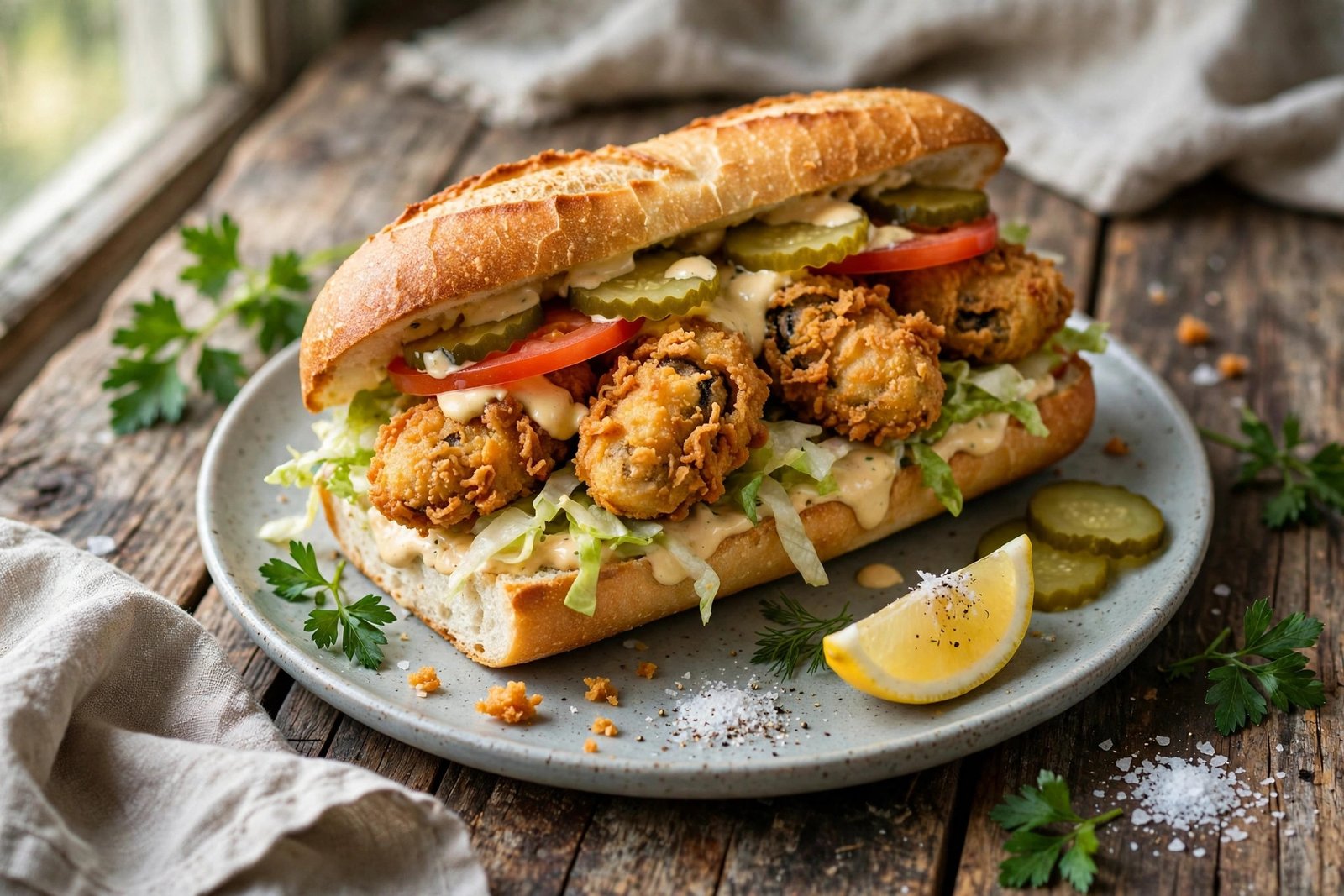
The oyster po' boy is New Orleans in a sandwich: plump oysters fried until golden and shatteringly crisp, tucked into a crusty French roll with lettuce, tomato, pickles and a creamy rémoulade. It is briny, crunchy, cool and rich all at once — a sandwich with a century of history and a flavour that never gets old, best eaten with both hands and a stack of napkins.
The story behind Oyster Po' Boy
The po' boy was born in New Orleans in 1929, during a streetcar workers' strike, when two brothers who ran a sandwich shop — Benny and Clovis Martin, former streetcar conductors themselves — started feeding the striking workers for free. When a striker walked in, one of the brothers would call out 'Here comes another poor boy,' and the name stuck. The sandwich itself was built for hungry working people: a long French roll, generously filled, cheap and filling.
Oysters were a natural filling. New Orleans sits at the edge of the Gulf, and oysters were once so plentiful and cheap that they were working people's food — fried up crisp, tucked into bread with whatever was at hand. The po' boy became a New Orleans institution, with shops across the city arguing over the best bread, the best fry, the best dressing. It is still the sandwich the city reaches for.
What makes the oyster version special is the contrast in a single bite: the hot, crunchy, cornmeal-crusted oyster against cool lettuce and tomato, the tang of pickles, the creamy heat of rémoulade, and the bread — crusty outside, soft inside, giving just enough when you bite. It is messy, generous food, and it is not trying to be anything else.
Cook it when you want a proper sandwich, not a polite one — a weekend lunch, a casual gathering, a night when dinner should be fun. It comes together fast once the oysters are shucked, and it is best eaten the moment it is built, standing in the kitchen or sitting down with a cold drink and a pile of napkins.
The po' boy has its own festival in New Orleans — the Oak Street Po-Boy Festival, where dozens of vendors compete with their own versions, from the classic fried oyster to creations nobody would have recognised in 1929. It is a measure of how deeply the sandwich sits in the city's life: not just a lunch, but a point of pride, argued over with the same seriousness as gumbo or jambalaya. Every neighbourhood has a shop its regulars swear by, and every regular has a strong opinion about the bread.
- Prep time
- 20 mins
- Cook time
- 15 mins
- Total time
- 35 mins
- Servings
- 4 servings
- Calories
- 680
Ingredients
- 24 fresh oysters, shucked
- 120 g cornmeal
- 60 g plain flour
- 1 teaspoon Cajun seasoning
- 2 eggs, beaten
- 120 ml vegetable oil, for frying
- 4 crusty French rolls
- 2 tablespoons butter, softened
- 2 cups shredded lettuce
- 2 tomatoes, sliced
- 8 dill pickle slices
- 120 ml rémoulade sauce
- 1 lemon, cut into wedges
- Louisiana hot sauce, to serve
Instructions
- Start with the oysters. Shuck them if they are not already shucked, and pat each one very dry with kitchen paper. This matters more than anything else in the recipe: a wet oyster will not hold its coating, and the cornmeal will slide straight off in the oil.
- Mix the cornmeal, plain flour and Cajun seasoning in a shallow bowl. The cornmeal gives the crunch, the flour helps it stick, and the Cajun seasoning brings the warmth. Give it a good stir so the seasoning is evenly spread through the mix.
- Set up a little production line: beaten eggs in one shallow bowl, the cornmeal mix in another, and a plate for the coated oysters. Dip each oyster in the egg first, let the excess drip off, then roll it in the cornmeal mixture, pressing gently so the coating sticks all over.
- Heat the vegetable oil in a large pan over medium-high heat. You want the oil about 1 cm deep and properly hot — a pinch of cornmeal dropped in should sizzle and dance immediately. If it just sinks and sits, wait a little longer.
- Fry the oysters in batches, 2 to 3 minutes per side, until they are deep golden and crisp all over. Do not crowd the pan: too many oysters at once drops the oil temperature and the coating goes soggy instead of crisp. Listen for a strong, steady sizzle.
- Lift the fried oysters onto a wire rack to drain — a rack keeps the undersides crisp, where paper can trap steam and soften them. Season them with a pinch of salt while they are still hot.
- Split the French rolls lengthways, butter the cut sides, and toast them cut-side down in a dry pan over medium heat until golden and lightly crisp. The buttered, toasted bread is what stands between the filling and a soggy sandwich.
- Spread rémoulade generously on both sides of each roll. Pile in the hot oysters, then the shredded lettuce, tomato slices and pickle slices. Serve immediately with lemon wedges and Louisiana hot sauce on the side.
Pro tips
- Dry the oysters well or the coating will slide off. Pat each one with kitchen paper until it feels almost dry to the touch — a few seconds of effort here saves the whole sandwich.
- Fry in batches so the oil stays hot and the oysters stay crisp. Crowding the pan is the fastest way to a soggy coating, so give each oyster room to fry properly.
- Use a soft, crusty French roll — it should give, not shatter. A roll that is too hard will squeeze the filling out when you bite; a roll that is too soft will collapse. New Orleans French bread is light and airy inside with a thin, crackling crust.
- Dress the sandwich just before serving so the bread stays crisp. A dressed po' boy waits for no one — build it and eat it within minutes.
- Drain the oysters on a wire rack, not paper. Paper traps steam underneath and softens the crust you just worked to build.
Variations & serving ideas
The po' boy is a format, not a single sandwich. Fried shrimp is the most common swap for oysters, and it works exactly the same way — same cornmeal coating, same dressing. Fried catfish, soft-shell crab and roast beef with gravy are all New Orleans classics in the same roll. If oysters are not your thing, you are still in po' boy territory with any of these.
The dressing is where people argue. Rémoulade is the classic for oyster po' boys — creamy, tangy, with mustard and Cajun spice — but a simple mayonnaise with a squeeze of lemon and a dash of hot sauce is a fine, honest alternative. Some people add a smear of Creole mustard. A few pickled jalapeños in place of the dill pickles bring a different kind of heat.
For serving, a po' boy is a meal on its own, but it loves company: a pile of chips, a scoop of coleslaw, a cold beer or a glass of sweet tea. If you are feeding a crowd, set up a po' boy bar — a tray of fried oysters, the rolls, the rémoulade and the toppings — and let everyone build their own.
If you want a lighter version, you can grill the oysters instead of frying them, though you lose the crunch that defines the sandwich. A compromise is to fry half the oysters and grill the rest. And for a smaller bite, the same filling works beautifully in slider-sized rolls as a party snack.
The bread deserves a word of its own. Real New Orleans French bread is lighter and airier than a baguette, with a thin, shattering crust and a soft, almost fluffy crumb — it is made to be stuffed generously without fighting back. If your local bakery sells a light French roll, that is your best bet. In a pinch, a soft hoagie roll works, but avoid anything dense or chewy: the bread should yield when you bite, not squeeze the filling out the sides.
Getting it right
The key technique is the fry. Oysters are delicate and full of moisture, so the coating has to go on dry oysters and into hot oil. Pat each oyster dry, coat it evenly in the cornmeal mix, and fry at medium-high heat — the oil should be around 180°C if you have a thermometer. The cornmeal crust needs heat to set quickly, and that fast set is what keeps it crisp instead of greasy.
Heat control is a balancing act. Too cool, and the oysters absorb oil and the coating goes soft. Too hot, and the cornmeal burns before the oyster inside is cooked through. Medium-high, in batches, 2 to 3 minutes per side — and let the oil come back up to temperature between batches. A crowded pan is the enemy of a good fry.
The most common mistake is a wet oyster. If the coating slides off in the pan, the oyster was not dry enough, or the egg dip was too heavy. Pat dry, dip lightly, press the cornmeal on firmly. The second mistake is building the sandwich too early: a dressed po' boy sitting for ten minutes is a soggy po' boy. Fry, build, eat — in that order, without delay.
One more detail: the oysters themselves. Buy them as fresh as you can, and shuck them just before cooking if possible. A fresh oyster smells like the sea — clean and briny, never fishy. If you are buying pre-shucked oysters, check that they are plump and sitting in clear liquor, not cloudy. The better the oyster, the better the sandwich, and no amount of seasoning can rescue a tired one.
Storing & reheating
A built po' boy does not keep — the bread goes soggy within the hour, and the oysters lose their crunch. If you have leftovers, store the components separately: fried oysters in the fridge in a sealed container for up to 1 day, rémoulade for up to a week, and the rolls and salad apart.
To revive leftover fried oysters, reheat them in a hot oven at 200°C for 5 to 6 minutes on a wire rack — this brings back some of the crispness. The microwave will only make them rubbery, so avoid it. Build a fresh sandwich with the reheated oysters and fresh toppings. Freezing fried oysters is not recommended: they go soft and watery when thawed.
Frequently asked questions
What is a po' boy?
A po' boy is a traditional New Orleans sandwich on French bread, usually filled with fried seafood or roast beef. The name dates to the 1929 streetcar strike, when a sandwich shop fed striking workers for free — 'poor boys'. It is still the city's defining sandwich, served dressed with lettuce, tomato, pickles and sauce.
What is rémoulade sauce?
Rémoulade is a creamy, tangy Louisiana sauce made with mayonnaise, mustard, pickles, lemon and Cajun spices. It is the classic dressing for a seafood po' boy. You can buy it ready-made, or stir one up at home in a few minutes from mayonnaise, wholegrain mustard, chopped pickles and hot sauce.
Can I use frozen oysters?
Fresh oysters are best, but thawed frozen oysters work — pat them very dry before coating, even more carefully than fresh ones, because they release more water as they thaw. If they feel very wet, let them drain in a colander for 10 minutes first.
What does dressed mean on a po' boy?
Dressed means with lettuce, tomato, pickles and mayonnaise or rémoulade — the full classic topping. If you order a po' boy 'dressed' in New Orleans, that is what you get. Undressed means just the filling and bread.
What bread should I use for a po' boy?
A light, crusty French roll is the real thing — crisp outside, soft and airy inside. A baguette is too dense and chewy for a proper po' boy. If you cannot find French rolls, a soft hoagie or sub roll is the closest substitute.
Can I make oyster po' boys ahead?
Not really — the magic is in the hot, crisp oyster against the cool toppings, and a built sandwich goes soggy fast. You can prep the rémoulade, slice the toppings and coat the oysters an hour ahead, then fry and build at the last minute. The fry itself only takes a few minutes.