Cornbread Recipe
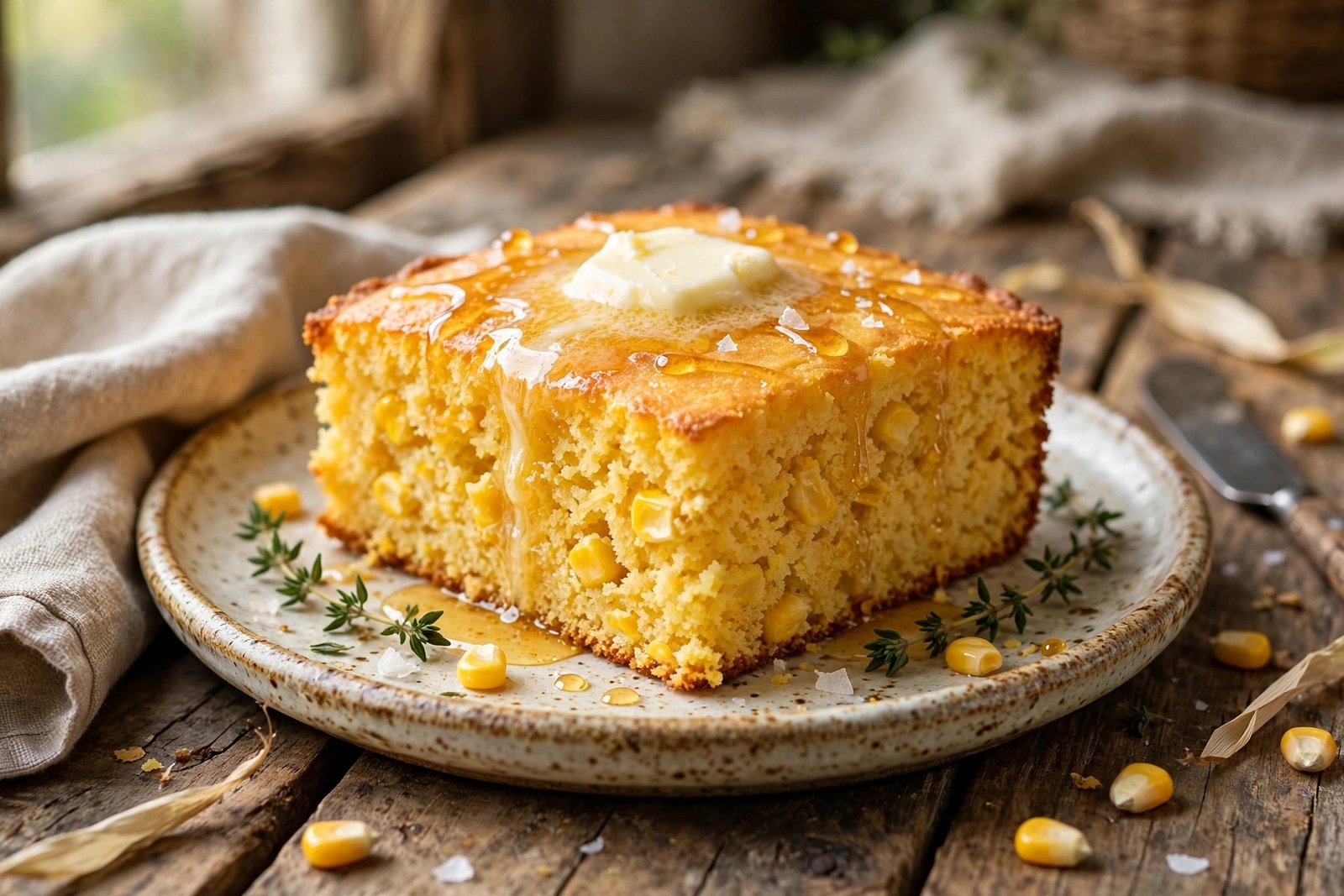
Southern cornbread is pure comfort: a golden, buttery crust giving way to a tender, moist crumb, baked in a screaming-hot cast-iron skillet. It takes thirty minutes from start to finish, needs nothing fancy, and turns a pot of beans or a plate of fried chicken into a proper meal. Make it savory, or add a little sugar for a sweeter style. A cast-iron skillet and ten minutes of heating are the whole secret.
The story behind Cornbread
Cornbread starts with corn, and corn starts with the Native peoples of the Americas, who ground it into meal and baked it into cakes long before European settlers arrived. When colonists in the South adopted cornmeal, it became the everyday bread of the region — wheat was expensive and scarce, but corn grew everywhere. The skillet version, baked in cast iron over a fire or in a hot oven, became the Southern standard. Cornmeal kept without refrigeration, travelled well, and fed a family for pennies, which is why it stayed at the centre of Southern cooking for so long.
By the 1800s cornbread was the bread of the Southern table, eaten with greens, beans, fried chicken and stews. It was poor people's food in the best sense: cheap, filling, and made from what the land gave. The great divide came later, as Northern cooks began adding sugar and wheat flour and baking a softer, sweeter, more cake-like version, while Southern cooks held the line on savory cornbread with little or no sugar and a crisp crust. The sugar argument still flares up at Southern tables, and cooks on both sides hold their ground with the confidence of people defending a family name.
What makes it special is the contrast. A hot skillet gives the bottom and edges a deep golden crust that crackles when you cut into it, while the inside stays soft, moist and faintly sweet from the corn itself. Buttermilk adds tang and tenderness, and butter brings richness. It is bread and side dish in one — something to tear, butter, and drag through pot liquor or chili. Good cornbread should crumble gently when you break it, never bend or bounce, and the smell of it baking is reason enough to make it.
Cook it whenever the main dish needs a partner. It belongs next to chili, black-eyed peas, collard greens, barbecue and fried chicken, and it is just as good on its own, warm from the skillet with honey butter. Thirty minutes, one bowl, one skillet, and the kitchen smells like a Southern Sunday. It is also the fastest bread you can bake from scratch — no yeast, no rising, no kneading, just a bowl, a skillet, and half an hour.
- Prep time
- 10 mins
- Cook time
- 20 mins
- Total time
- 30 mins
- Servings
- 8 servings
- Calories
- 240
Ingredients
- 200g fine yellow cornmeal
- 120g plain flour
- 2 tbsp sugar (optional, for a sweeter style)
- 1 tbsp baking powder
- 1 tsp salt
- 0.5 tsp baking soda
- 2 eggs
- 300ml buttermilk
- 80g butter, melted, plus 1 tbsp for the skillet
- Honey butter, to serve
Instructions
- Preheat the oven to 220C (425F) and put a 25cm cast-iron skillet inside to heat. The skillet needs a good 10 minutes to get screaming hot — this is what creates the crisp crust, so do not rush it or skip it. Ten minutes in the oven is the minimum for a proper crust.
- While the oven heats, whisk the cornmeal, flour, sugar (if you are using it), baking powder, salt and baking soda in a large bowl. Break up any lumps of baking powder with your fingers so they do not leave bitter pockets in the finished bread. A fork works fine if you do not have a whisk handy.
- In a separate bowl or jug, whisk the eggs, buttermilk and melted butter until smooth and pale. The butter should be melted but not hot — if it is still steaming, let it cool a minute so it does not scramble the eggs. Room-temperature eggs mix in more evenly than cold ones.
- Pour the wet ingredients into the dry and stir with a spoon or spatula just until combined. A few lumps are fine — in fact, they are good. Overmixing develops the gluten in the flour and turns the crumb tough and dense instead of tender. Stop stirring while you can still see a few floury streaks.
- Carefully take the hot skillet out of the oven with oven gloves and add the tablespoon of butter. Swirl it around so it coats the bottom and sides, tilting the pan. It will foam and brown slightly — that is flavour going into the crust. Tilt the pan so the butter reaches every corner and edge.
- Pour in the batter all at once. It should sizzle loudly as it hits the hot buttered iron — that sizzle is the sound of the crust forming. Give the pan one gentle shake to level the batter, then get it straight back into the oven. Work fast — the batter should not sit cooling in the bowl.
- Bake for 18 to 20 minutes, until the top is deeply golden, the edges have pulled slightly away from the sides, and a toothpick or skewer pushed into the centre comes out clean. If the top browns too fast, lay a sheet of foil loosely over it for the last few minutes. The top should be deeply golden, not pale blonde.
- Cool in the skillet for 5 minutes, then cut into wedges and serve warm. Cornbread is at its best fresh from the oven, with honey butter melting into the crumb and the crust still crackling at the edges. Serve it in the skillet at the table for a rustic touch.
Pro tips
- The preheated skillet is what creates the legendary crisp crust. A cold pan gives a pale, soft bottom with no crunch at all, so give the skillet a full 10 minutes in the hot oven before the batter goes anywhere near it.
- Do not overmix the batter. Stir just until the dry ingredients disappear — lumps are fine and expected. The more you stir, the tougher the crumb, and cornbread should be tender enough to crumble gently, not chewy.
- Buttermilk keeps the crumb moist and adds a gentle tang that balances the corn. In a pinch, stir a tablespoon of lemon juice or vinegar into 300ml of milk and let it sit for 5 minutes before using.
- Sugar is the great Southern debate. Traditional Southern cornbread has none at all; Northern-style cornbread is sweet. This recipe makes it optional, so include it or skip it to suit your table — nobody at your table will check your credentials.
- Let it rest for 5 minutes before cutting. Slicing straight out of the oven makes it crumble apart, while a short rest lets the crumb set so you get clean, neat wedges that still steam when you butter them.
Variations & serving ideas
The easiest variation is the mix-in. Fold a cup of grated sharp cheddar and two finely chopped jalapeños into the batter for a spicy, cheesy version that is excellent with chili. Sweet corn kernels, stirred in straight from the cob or the freezer, add pops of sweetness and texture. Crumbled cooked bacon and a little black pepper turn it into a smoky, savoury loaf. A spoonful of creamed corn folded into the batter makes an extra-moist version that stays soft for days.
For a sweeter breakfast bread, keep the sugar and add a tablespoon of honey to the wet ingredients, then serve warm with butter and more honey. Maple syrup works in place of honey and gives a deeper, woodsy sweetness. A handful of blueberries folded into a sweetened batter makes a summer version that eats like a cake. For a brunch version, serve warm wedges with butter and a fried egg on top — the yolk soaks into the crumb beautifully.
Shape changes the experience too. The same batter baked in a greased muffin tin makes individual cornbread muffins — bake for 12 to 15 minutes — and a loaf tin gives neat slices for sandwiches. Corn sticks, baked in a cast-iron corn-stick pan if you have one, are the traditional shape in parts of the South. Mini muffins bake in 10 to 12 minutes and make easy finger food for a barbecue or a potluck table.
Serve cornbread the classic way alongside chili, black-eyed peas, collard greens or barbecue, where it soaks up sauces and juices. It also crumbles beautifully into a glass of cold buttermilk, the old Southern way, or into a bowl of soup where it thickens the broth. With fried chicken and honey butter, it needs nothing else at all. Leftover cornbread crumbles into dressing for roast chicken, or into a glass of cold buttermilk the old Southern way.
Getting it right
The technique that matters most is the hot skillet. Cast iron holds heat, and when the batter hits iron that has been sitting at 220C, the outside sets instantly and starts browning before the inside has even begun to rise. That instant set is what builds the crust — golden, crisp, faintly buttery — and it is the difference between cornbread and a cornmeal cake. A cold or barely warm pan cannot do it, no matter how good the batter is. If you hear a loud sizzle when the batter hits the pan, the skillet was hot enough — silence means it needed more time.
Mixing is the second skill, and it is mostly about restraint. The batter needs only a dozen strokes: wet into dry, fold until the flour disappears, stop. Lumps are not a problem; they bake out. What ruins cornbread is enthusiastic stirring, which wakes up the gluten in the wheat flour and turns the crumb from tender to tough. Stir like you mean it, then stop before you think you should. Count your strokes if it helps: ten to twelve folds is usually enough to bring the batter together without waking the gluten.
The most common mistakes are overbaking and overmixing, in that order. Cornbread dries out fast past the point of doneness, so pull it the moment a toothpick comes out clean — the centre will still feel slightly soft, and it firms as it cools. The other mistake is using coarse cornmeal when the recipe calls for fine; coarse meal gives a gritty, crumbly texture that never quite holds together. Measure the cornmeal by weight if you can — a cup of cornmeal varies more than a cup of flour, and the balance matters.
Storing & reheating
Cornbread keeps at room temperature in an airtight container or wrapped tightly in foil for 2 days. After that, move it to the fridge, where it keeps for up to a week — the crust softens, but the flavour stays good. For longer storage, wrap wedges individually in cling film and freeze for up to 3 months. Wrap it well — exposed cornbread dries out fast in the fridge air.
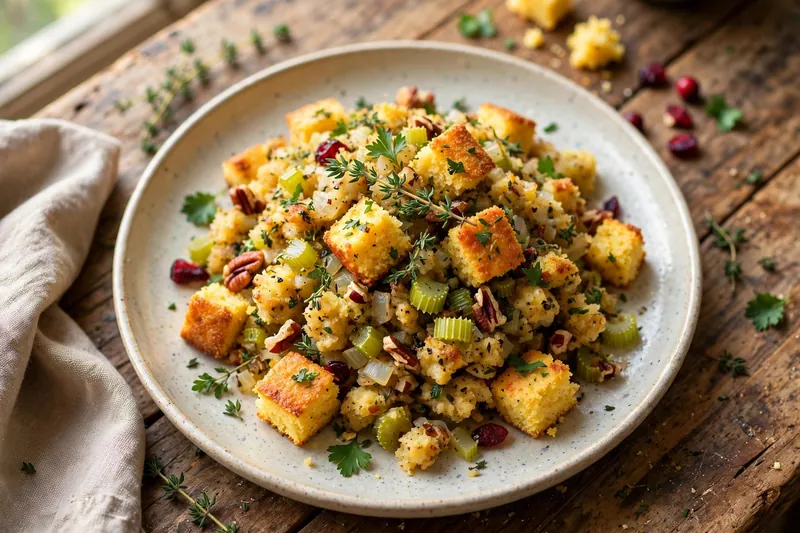
Reheat slices in a hot oven at 180C for 5 to 8 minutes to bring back some of the crust, or split and toast them in a dry skillet with a little butter. The microwave warms it in 20 seconds but leaves the crust soft, so save that for when you are in a hurry. Stale cornbread crumbles well into stuffing, dressing and soup. Split day-old wedges, butter them, and toast in a skillet for breakfast.
Frequently asked questions
Should Southern cornbread have sugar?
Traditional Southern cornbread is savory with no sugar at all — the corn provides all the sweetness it needs. Northern-style cornbread is sweeter and more cake-like. This recipe makes sugar optional, so you can follow either tradition. Two tablespoons gives a gentle sweetness without turning it into cake.
Can I make cornbread without a cast-iron skillet?
Yes, use a greased 20cm baking pan or an ovenproof dish. You will still get good cornbread, but you will miss the signature crisp crust that only a screaming-hot cast-iron skillet gives. Preheat the pan in the oven the same way to get as close as possible.
Why is my cornbread dry?
It was most likely overbaked or overmixed. Pull it from the oven the moment a toothpick comes out clean — the centre firms as it cools. Overmixing also dries the crumb by developing gluten, so stir just until the dry ingredients disappear and leave the lumps alone.
Can I add mix-ins to cornbread?
Yes, and it is one of the best things about cornbread. Stir in grated cheddar and chopped jalapeños, sweet corn kernels, or crumbled cooked bacon before baking. Keep the total to about a cup so the batter still bakes through evenly in 18 to 20 minutes.
What can I use instead of buttermilk?
Stir a tablespoon of lemon juice or white vinegar into 300ml of milk and let it stand for 5 minutes until it thickens slightly. Plain yogurt thinned with a little milk also works. The acidity matters because it reacts with the baking soda to give the bread its lift.
Does cornmeal type matter?
Yes. This recipe uses fine yellow cornmeal, which gives a tender crumb and a smooth texture. Coarse cornmeal makes a grittier, more crumbly bread that can fall apart. White cornmeal works too and is traditional in parts of the South, though the colour will be paler.