Blackened Catfish Recipe
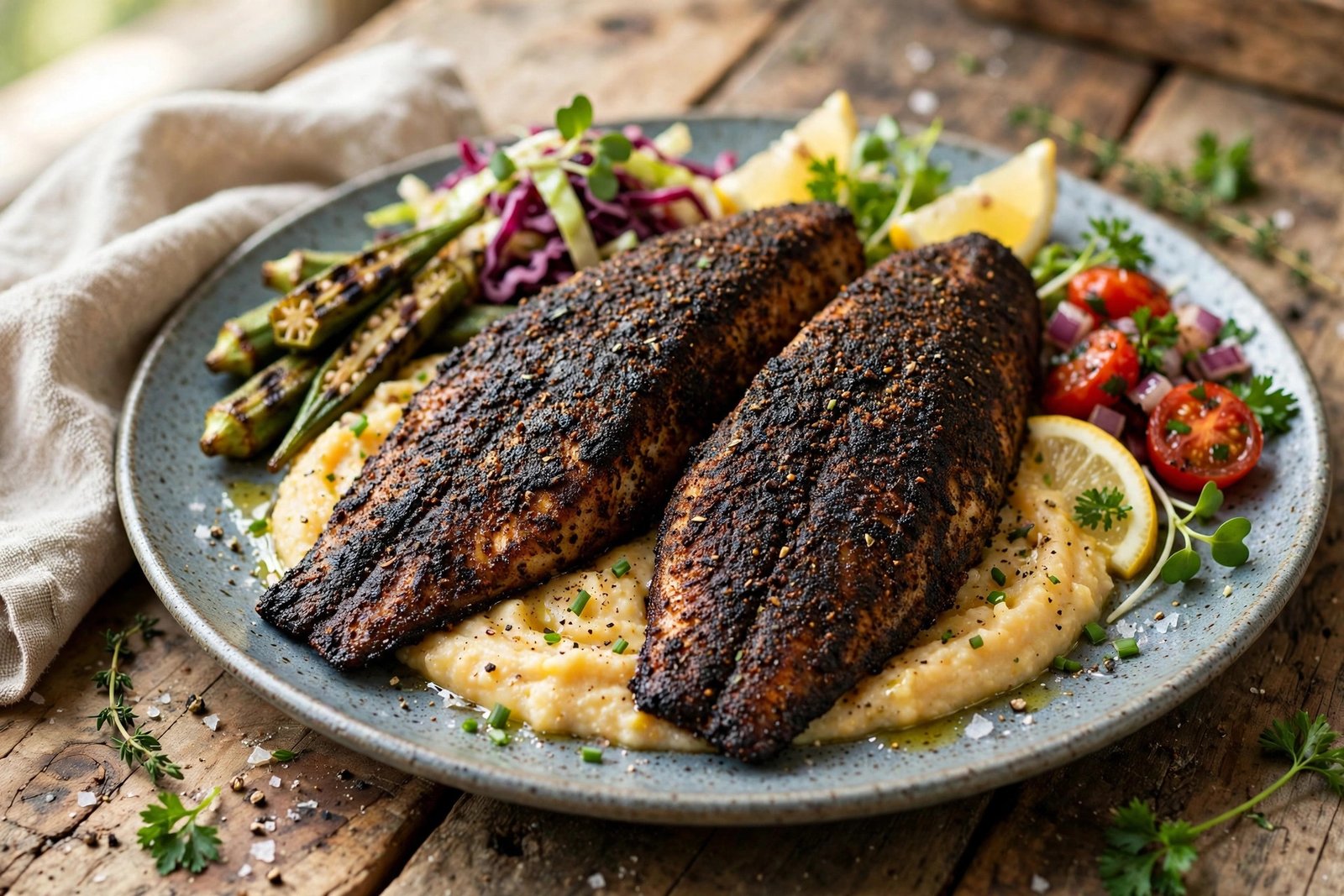
Blackened Catfish is a Louisiana favourite — fish fillets coated in a smoky Cajun spice blend and seared in a screaming-hot pan until dark, crusty and fragrant. Inside, the fish stays moist and flaky. It is bold, fast and deeply satisfying, ready in just 30 minutes.
The story behind Blackened Catfish
Blackened fish was made famous by Chef Paul Prudhomme in New Orleans in the 1980s, and it changed American cooking. The technique is simple and dramatic: a fish fillet coated in spices, seared in a cast-iron skillet so hot that the spices char into a dark, flavourful crust. The dish became a sensation, and blackened redfish was so popular that it nearly wiped out the redfish population.
Catfish is the perfect fish for blackening. It is firm, mild and affordable, with a clean flavour that takes well to bold seasoning. The fillets are thick enough to develop a crust without overcooking, and the flesh stays moist and flaky inside.
What makes it special is the crust. The spice blend — paprika, garlic powder, onion powder, thyme, oregano, cayenne, salt and pepper — chars in the hot pan into a dark, smoky layer that is intensely flavourful. The fish underneath stays tender, and the contrast between crust and flesh is what makes every bite interesting.
The pan matters as much as the fish. A cast-iron skillet, heated until it just begins to smoke, is the traditional tool. It holds heat evenly and creates the fierce, even sear that blackening needs. A regular pan will work, but it will not get as hot or hold its heat as well.
Blackening is not burning. The dark colour comes from the spices charring, not the fish itself. Done right, the crust is dark and flavourful, not bitter. Done wrong — with the heat too high for too long — it turns acrid. The difference is a matter of minutes and attention.
The dish is unmistakably Louisianan, born of Cajun and Creole cooking traditions that favour bold seasoning and high-heat techniques. It is the kind of food that tastes like New Orleans — smoky, spicy and generous.
Cook it when you want dinner in half an hour with real impact. Blackened catfish needs little more than rice and a salad, and it is the kind of dish that makes a weeknight feel like a night out.
The technique is fast and a little theatrical — the pan smokes, the spices sizzle, and the kitchen fills with a warm, smoky aroma. Open a window, turn on the fan, and enjoy the drama. It is part of the experience.
The economy is generous too. Catfish is one of the most affordable fish, the spices are pantry staples, and the whole dish feeds four for very little. It is proof that bold flavour does not need an expensive ingredient.
Blackened catfish endures because it is both simple and spectacular — a technique any home cook can master, with a result that tastes like a restaurant. Once you learn it, you will use it on every firm fish you buy.
- Prep time
- 15 mins
- Cook time
- 15 mins
- Total time
- 30 mins
- Servings
- 4 servings
- Calories
- 460
Ingredients
- 4 catfish fillets, about 700g total
- 2 tablespoons paprika
- 1 teaspoon garlic powder
- 1 teaspoon onion powder
- 1 teaspoon dried thyme
- 1 teaspoon dried oregano
- 1 teaspoon cayenne pepper
- 1 teaspoon salt
- 1/2 teaspoon black pepper
- 2 tablespoons melted butter
- 1 tablespoon vegetable oil
- 1 lemon, cut into wedges
- Fresh parsley, to serve
Instructions
- Mix the paprika, garlic powder, onion powder, dried thyme, dried oregano, cayenne pepper, salt and black pepper in a small bowl. Stir well so the spices are evenly combined — this blend is the heart of the dish, so make sure there are no clumps.
- Pat the catfish fillets completely dry with kitchen paper. Dry fish sears better than wet fish, and the spice coating sticks more evenly. Brush each fillet lightly with melted butter on both sides.
- Coat each fillet generously on both sides with the spice mix, pressing it on firmly with your hands so it adheres. The coating should be thick and even — do not be shy, the spices are the crust.
- Heat the vegetable oil in a cast-iron skillet over high heat until it just begins to smoke. The pan must be very hot — this is not a medium-heat dish. Open a window and turn on the extractor fan, since there will be smoke.
- Lay the fillets in the pan and cook for 3 to 4 minutes per side without moving them. The spices will darken and char, forming a dark, crusty layer. Resist the urge to peek — leaving the fish alone is what builds the crust.
- Check that the fish is cooked through — the flesh should flake easily and be opaque all the way through. If a fillet is very thick, give it another minute per side rather than raising the heat.
- Remove the fillets from the pan and rest them for 2 minutes so the juices settle. The crust will firm up slightly as the fish rests.
- Serve hot with lemon wedges and a sprinkle of fresh parsley. The lemon is essential — its acidity cuts through the smoky spice and brightens every bite.
Pro tips
- Use a cast-iron skillet if you have one. It holds heat better than any other pan and creates the fierce, even sear that blackening needs.
- Pat the fish completely dry before coating. Wet fish steams instead of searing, and the spice coating slides off instead of forming a crust.
- Do not move the fish once it is in the pan. The crust forms by contact with the hot surface — moving the fillet breaks it before it sets.
- Open a window and turn on the fan before you start. Blackening produces smoke, and it is better to be ready for it than surprised by it.
- Press the spice mix on firmly. A loose coating falls off in the pan; a pressed coating chars into a proper crust.
Variations & serving ideas
Use the same blackening technique on redfish, snapper, mahi-mahi or salmon — any firm fish works. Adjust the cooking time to the thickness: thin fillets need 2 to 3 minutes per side, thick ones need 4 to 5.
Make blackened chicken by coating chicken breasts or thighs in the same spice mix and searing them in the hot skillet. The chicken needs longer — 5 to 6 minutes per side — but the crust is just as good.
For a milder version, halve the cayenne pepper and add a little more paprika. The crust will still be dark and flavourful, but the heat will be gentler. Smoked paprika adds a deeper, smokier note.
Serve the fish in tacos with shredded cabbage, a squeeze of lime and a dollop of sour cream. The crunchy slaw and cool cream balance the smoky spice perfectly, and the tacos are quick to assemble.
For a complete meal, serve with dirty rice, coleslaw and cornbread — the classic Louisiana plate. The rice soaks up any juices, the slaw adds crunch, and the cornbread is there for mopping up.
A cold beer or a glass of iced tea is the natural drink with blackened fish. The cold drink cools the palate between bites, and the beer's maltiness pairs well with the smoky spices.
Leftover blackened catfish flakes beautifully into salads, pasta or fried rice. The spiced crust adds flavour to whatever it joins, so do not waste a single piece.
Make a double batch of the spice mix and store it in a jar — it keeps for months and works on fish, chicken, prawns and vegetables. Having it ready makes blackened anything a 20-minute dinner.
In summer, cook the fish on a barbecue — the smoke from the coals adds another layer of flavour. Oil the grate well and keep the fish still until the crust forms.
For a lighter meal, serve the fish over a big green salad with a citrus vinaigrette. The warm, spiced fish against cool, crisp leaves is a combination that works in any season.
Getting it right
The pan temperature is the technique that matters most. The skillet must be heated until it just begins to smoke — that fierce heat is what chars the spices into a crust in 3 to 4 minutes. A lukewarm pan will steam the fish and turn the spices soggy instead of crisp.
The spice coating is the second skill. It should be thick, even and pressed on firmly — the spices are not a seasoning, they are the crust. Brush the fish with butter first so the spices adhere, then press the mix on with your hands until every surface is covered.
The most common mistake is moving the fish too soon. The fillet bonds to the pan at first, then releases once the crust has formed. If you try to flip and it resists, it is not ready — give it another minute. Patience is the whole technique.
Cast iron is the ideal tool because it holds heat. A thin pan cools the moment the cold fish hits it, and the temperature drops too low for proper blackening. If you do not have cast iron, use the heaviest pan you own and heat it for longer.
Sourcing good catfish matters. Look for firm, white fillets with no fishy smell — fresh catfish should smell clean and mild. Frozen catfish works well too; thaw it completely and pat it very dry before coating.
Storing & reheating
Blackened catfish is best eaten fresh — the crust is at its crispiest straight from the pan. Leftovers keep in the fridge for up to 2 days in a sealed container, though the crust will soften.
Do not freeze cooked blackened fish. Freezing and thawing turns the flesh mushy and the crust soggy. Cook only as much as you will eat, or plan to use leftovers cold.
To reheat, warm the fish in a hot oven (200 C for 5 minutes) to revive some of the crust's texture. Avoid the microwave, which makes the fish rubbery and the coating soft.
Cold leftover blackened catfish is excellent flaked into a salad, a wrap or a grain bowl. The spiced crust adds flavour even when cold, so do not throw it away.
Frequently asked questions
What does 'blackened' mean?
Blackened is a cooking technique from Louisiana where fish or meat is coated in spices and seared in a very hot cast-iron skillet. The spices char into a dark, flavourful crust. The dark colour comes from the spices, not from burning the fish — done right, the crust is smoky and savoury, not bitter. The technique was popularised by Chef Paul Prudhomme in New Orleans in the 1980s, and blackened redfish became so popular that it nearly wiped out the redfish population.
Is blackened catfish very spicy?
It has a warm, smoky heat from the cayenne pepper, but it is not overwhelmingly hot. The paprika, thyme and oregano add more flavour than fire. You can adjust the cayenne to your taste — halve it for a milder version, or add more for extra heat.
Do I need a cast-iron skillet?
Cast iron is ideal because it holds heat better than any other pan, but the heaviest skillet you own will work. The key is getting the pan very hot before the fish goes in. Avoid non-stick pans — they cannot handle the high heat needed for blackening.
Why is there so much smoke?
Blackening uses very high heat, and the spices and butter will smoke as they char. It is normal and expected — open a window, turn on the extractor fan, and do not be alarmed. The smoke is part of the technique.
What fish can I blacken?
Any firm fish works — redfish, snapper, mahi-mahi, salmon, tilapia and trout all take well to blackening. The fillets should be thick enough to develop a crust without overcooking. Delicate fish like sole are too thin and will fall apart.
What do I serve with blackened catfish?
Dirty rice, coleslaw and cornbread make the classic Louisiana plate. For a lighter meal, serve with a green salad and lemon wedges. The fish also works well in tacos with cabbage slaw and sour cream.


