Southern Banana Pudding Recipe
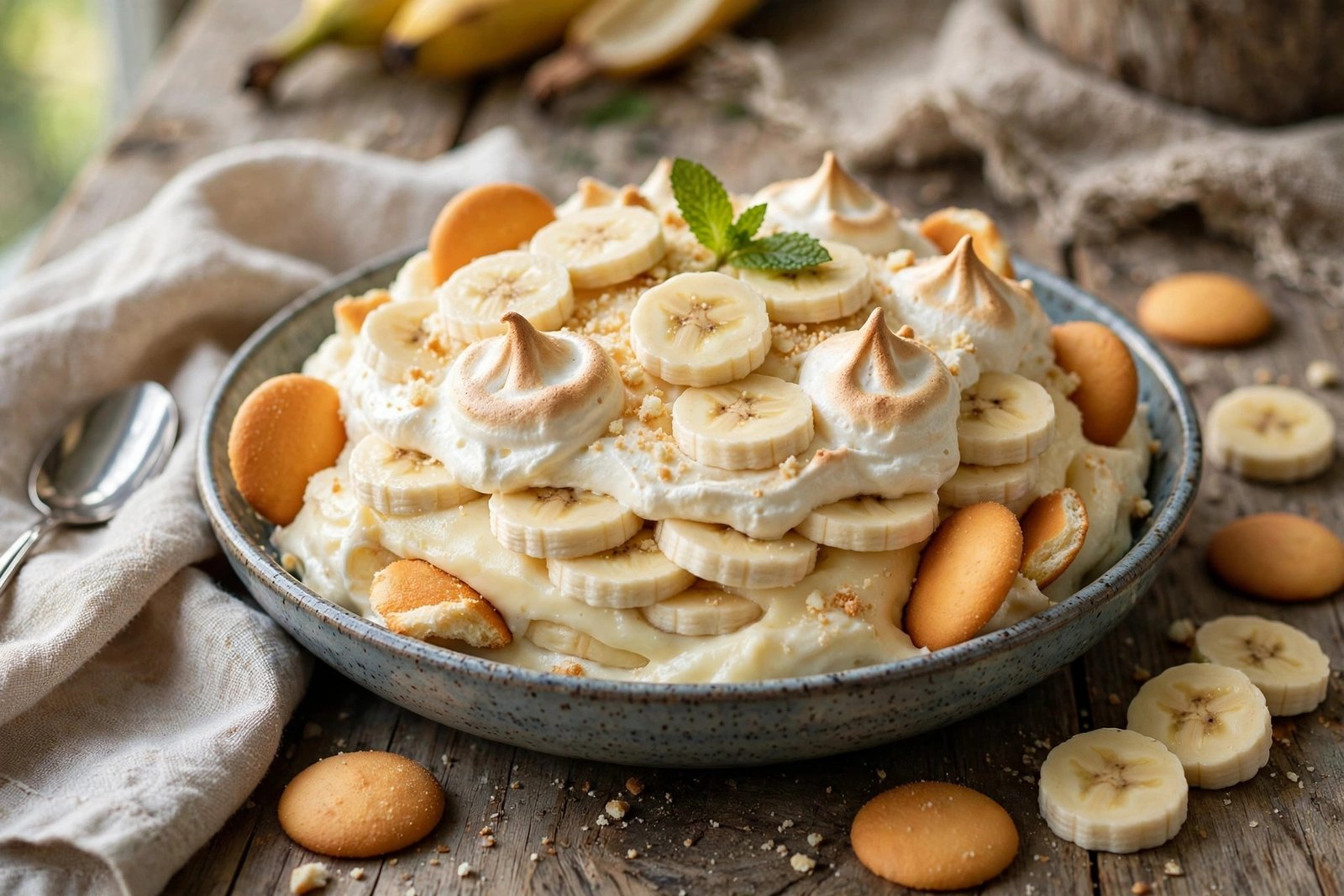
Southern banana pudding is a dessert of pure nostalgia: layers of vanilla wafers, sliced bananas and silky vanilla custard, crowned with a cloud of golden meringue. It is the pudding of church suppers and family reunions across the American South, and it tastes like a warm afternoon in Georgia.
The story behind Southern Banana Pudding
Banana pudding is one of the defining desserts of the American South, and its history is tied to the banana itself. Bananas became widely available in the United States in the late 19th century, as steamships brought them up from Central America, and Southern cooks — who already loved a layered custard dessert — put them together with vanilla wafers and meringue. By the early 20th century, banana pudding was a fixture at church suppers, family reunions and Sunday dinners across the South.
The vanilla wafer is not a random choice. The crisp, vanilla-flavoured biscuit softens in the custard as the pudding chills, turning into a cake-like layer that holds the whole dessert together. The bananas, sliced and layered between the wafers, bring sweetness and a soft, creamy texture. And the meringue on top — golden, cloud-like, baked until it just colours — is the crowning touch that makes the pudding look like a celebration.
What makes Southern banana pudding special is the custard. It is a proper cooked custard, made from egg yolks, milk, sugar and cornflour, stirred patiently until it thickens into something silky and rich. It is not instant pudding from a packet, and the difference is enormous — the homemade custard has a depth and a vanilla warmth that no mix can match. The meringue, made from the leftover egg whites, means nothing is wasted.
Make banana pudding the day before you want to serve it, so the wafers have time to soften and the flavours have time to come together. It is a dessert for a crowd — a big dish, served with a large spoon, at a table full of people. It is also a dessert that carries memories: for many Southerners, the smell of banana pudding is the smell of childhood, of family kitchens, of a table that was always full.
The meringue topping has its own history. In the days before electric mixers, beating egg whites by hand was hard work, and a tall, golden meringue was a sign of a cook who knew what she was doing. The meringue also used up the egg whites left over from the custard, so nothing went to waste — a practical consideration in kitchens where every egg counted. Today, an electric mixer makes the meringue easy, but the golden peaks still look impressive.
- Prep time
- 25 mins
- Cook time
- 20 mins
- Total time
- 45 mins
- Servings
- 4 servings
- Calories
- 380
Ingredients
- 4 ripe bananas, sliced
- 300 g vanilla wafers
- 500 ml whole milk
- 3 egg yolks
- 100 g caster sugar
- 3 tablespoons cornflour
- 1 teaspoon vanilla extract
- 1 pinch of salt
- 3 egg whites
- 60 g caster sugar
- 1/2 teaspoon cream of tartar
- Butter, for greasing
Instructions
- Start with the custard. In a medium bowl, whisk the egg yolks, 100g caster sugar, cornflour and a pinch of salt until smooth and pale. The mixture should be thick and creamy, with no lumps of cornflour. Set it aside while you warm the milk.
- Warm the milk in a medium saucepan over medium heat until it is steaming and small bubbles appear around the edges — not boiling. Boiling milk can scorch and gives the custard a cooked flavour. Take the pan off the heat as soon as it steams.
- Slowly pour the warm milk into the egg yolk mixture, whisking constantly. Pour in a thin stream and keep whisking — if you add the milk too fast, the eggs can scramble. This is called tempering, and it brings the eggs up to temperature gently. Once all the milk is in, pour the mixture back into the saucepan.
- Cook over medium heat, stirring constantly with a wooden spoon or whisk, for about 6 minutes, until the custard thickens. It should coat the back of the spoon and hold a line when you run your finger through it. Do not let it boil — boiling makes custard grainy. Take it off the heat the moment it thickens.
- Stir in the vanilla extract and let the custard cool slightly — about 10 minutes, stirring now and then so a skin does not form. The custard should be warm, not hot, when you start layering. If a skin does form, whisk it back in or lift it off.
- Butter a baking dish generously. Layer the bottom with vanilla wafers, then a layer of sliced banana, then a layer of warm custard. Repeat the layers — wafers, banana, custard — until the dish is full, ending with a layer of custard on top. Press the layers down gently as you go so there are no air pockets.
- Make the meringue. Beat the egg whites with the cream of tartar in a clean, dry bowl until soft peaks form — the whites should hold their shape but still look soft and glossy. Gradually add the 60g caster sugar, a spoonful at a time, beating well after each addition, until the meringue is stiff, glossy and holds a firm peak.
- Spread the meringue over the top of the pudding, sealing it right to the edges of the dish. The seal matters — meringue that does not touch the edges shrinks as it bakes and leaves a gap. Swirl the top with the back of a spoon for a decorative finish.
- Bake at 180°C for 12 to 15 minutes until the meringue is golden brown on the peaks. Watch closely — meringue goes from golden to burnt quickly. Take it out of the oven and let it cool, then chill in the fridge for at least 2 hours before serving. The chill is essential: it lets the wafers soften into a cake-like layer and the custard set.
Pro tips
- Use bananas that are ripe but still firm, so the slices hold their shape. Overripe bananas turn to mush in the layers, and underripe bananas are starchy and flavourless. Look for bananas with a few brown spots but still firm to the touch.
- Seal the meringue to the edges of the dish so it does not shrink. Spread it right to the rim, touching the dish all the way around. A gap at the edge lets the meringue pull back as it bakes and cools.
- Chill well before serving; the wafers soften into a cake-like layer. Two hours is the minimum; overnight is even better. The pudding needs time for the wafers to absorb the custard and turn soft.
- A squeeze of lemon on the bananas keeps them from browning. Toss the slices gently in a little lemon juice before layering. The lemon also adds a faint brightness that balances the sweetness of the custard.
- Make sure the bowl and beaters are completely clean and dry before beating the egg whites. Any trace of grease or yolk stops the whites from whipping properly. A glass or metal bowl works best — plastic can hold traces of fat.
Variations & serving ideas
The most common variation is the topping. Many modern versions skip the baked meringue and top the pudding with whipped cream instead — it is quicker, cooler, and just as good. Sweeten the cream lightly and whip it to soft peaks. Some cooks use both: a layer of meringue and a dollop of whipped cream on each serving.
The wafers can change too. Shortbread biscuits make a richer, butterier layer. Gingersnaps add a warm, spicy note that works beautifully with banana. Graham crackers give a honeyed flavour. Whatever biscuit you use, it should be crisp enough to hold its shape during layering and soft enough to absorb the custard as it chills.
For a chocolate twist, add a layer of chocolate shavings or a drizzle of chocolate sauce between the layers. A spoonful of peanut butter, spread thinly on the wafers, makes a banana-peanut butter pudding that children love. A splash of rum or bourbon in the custard gives it a grown-up warmth.
Serve banana pudding in individual glasses or jars for a party — layer the wafers, banana and custard in small portions, top with meringue or cream, and chill. It looks beautiful and it is easy to serve. For a crowd, the big dish is still the way to go: it is a dessert for sharing, served with a large spoon and second helpings.
For a lighter pudding, use low-fat milk and reduce the sugar in the custard slightly — the bananas bring plenty of sweetness on their own. A layer of sliced strawberries alongside the bananas adds colour and a fresh, tart note. And if you are making it for children, let them help with the layering — it is one of the easiest desserts to assemble, and small hands are good at arranging wafers.
Getting it right
The key technique is the custard. Egg yolks, sugar and cornflour whisked smooth, warm milk added slowly while whisking, then cooked over medium heat, stirring constantly, until it thickens. The stirring is non-negotiable — custard that sits still on the heat catches on the bottom and goes lumpy. Six minutes of steady stirring gives you a silky, smooth custard. Do not let it boil; boiling makes custard grainy.
The meringue needs a clean, dry bowl and patience. Beat the whites with cream of tartar until soft peaks form, then add the sugar gradually — a spoonful at a time, beating well after each. Rushing the sugar in all at once makes a grainy meringue that weeps. The finished meringue should be stiff, glossy and smooth, holding a firm peak when you lift the beater.
The common mistakes are undercooking the custard and under-chilling the pudding. Custard that is too thin runs through the layers instead of holding them together — cook it until it coats the back of a spoon. And a pudding served too soon has crunchy wafers and unset custard; two hours in the fridge is the minimum, and overnight is better. Patience at both stages is what makes the difference.
Storing & reheating
Banana pudding keeps for up to 2 days in the fridge, covered, though the bananas will soften and darken slightly over time. The flavour stays good, and the wafers continue to soften into a cake-like texture. It is best eaten within 24 hours, when the bananas are still fresh and the meringue is at its best.
Do not freeze banana pudding — the custard separates on thawing and the bananas turn brown and mushy. If you want to make it ahead, assemble it the day before and refrigerate; it will be at its best the next day. Leftover pudding, if there is any, makes a wonderful breakfast — not that anyone will admit to eating dessert for breakfast.
Frequently asked questions
What is Southern banana pudding?
It is a layered American dessert of vanilla wafers, bananas and vanilla custard, traditionally topped with meringue. It is a fixture at church suppers and family reunions across the American South, and it is best made the day before serving.
Can I use whipped cream instead of meringue?
Yes. Many modern versions top the pudding with whipped cream instead of baked meringue. Whip the cream to soft peaks with a little sugar and spread it over the top just before serving. It is quicker and cooler than meringue.
How long does banana pudding keep?
Up to 2 days in the fridge, though the bananas will soften and darken slightly. It is best eaten within 24 hours, when the bananas are still fresh. Cover the dish tightly so the pudding does not absorb fridge smells.
Can I use instant pudding mix?
You can, but homemade custard tastes far better and takes only a few minutes more. The cooked custard has a depth and vanilla warmth that no mix can match, and it is the heart of the dessert. If you are short on time, the mix works — but try the real thing at least once.
Why did my custard go lumpy?
The milk was added too fast, or the custard boiled. Add the warm milk slowly while whisking constantly, and cook over medium heat, stirring all the time, without letting it boil. If it does go lumpy, push it through a sieve — it will usually recover.
Can I make banana pudding without eggs?
You can make the custard with cornflour alone — increase the cornflour to 4 tablespoons and skip the yolks. The custard will be lighter and less rich, but it still works. Top with whipped cream instead of meringue, which needs egg whites.


